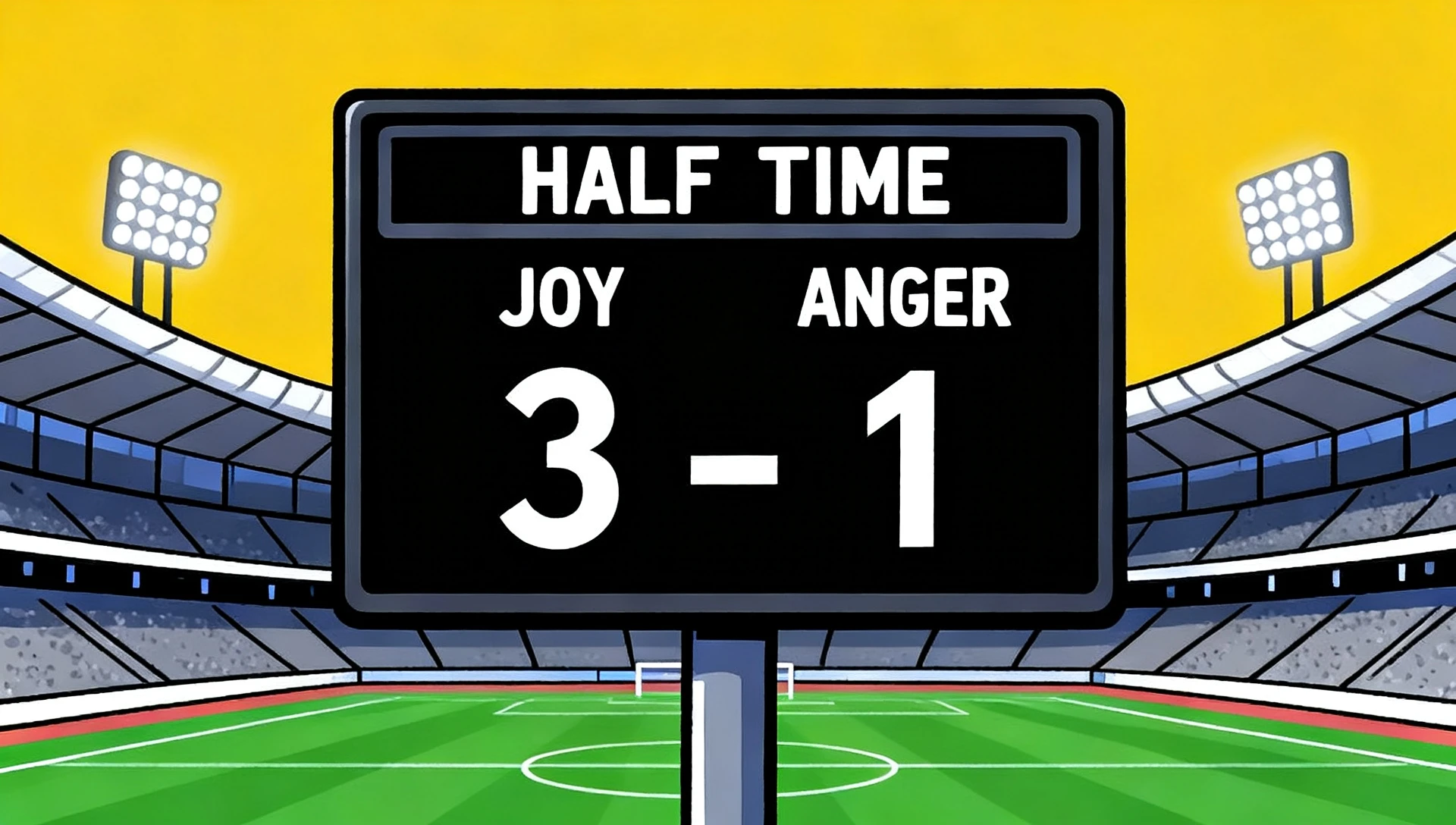
 Customer Emotion Mapping: World Cup Edition
Score more than you concede: every process produces an emotion, and the emotion is the only part your customer remembers.
Customer Emotion Mapping: World Cup Edition
Score more than you concede: every process produces an emotion, and the emotion is the only part your customer remembers.

CX Corner
Issue 55 · 21 May 2026
The (often stolen) thoughts of Wordnerds' CEO, Pete Daykin. A fortnightly Voice of Customer newsletter for people tasked with making business improvement from customer feedback. Contains light swearing, unnecessary personal detail and information about what we're learning here at Wordnerds.
Your insight is fine. You just don't have a process for action.
The problem was never your data. It's that nobody owns the step between an insight and someone changing the work.
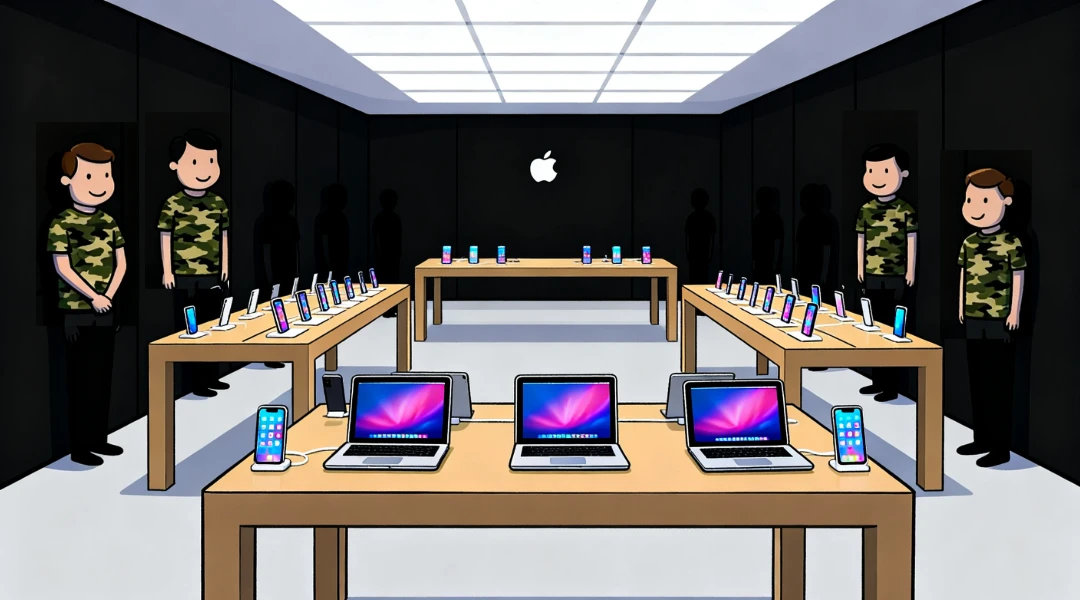
Apple got something beautifully right. Twenty years of Apple-hatred means I'm somewhat conflicted about telling you.
Hey there,
OK. I feel we know each other well enough now. I'm going to say it and you might not like it. Apple products are a bit toss, aren't they?
Don't get me wrong—I get it. We've all seen the Simon Sinek video. Jobs was a genius. Jony Ive designs gorgeous things. With the iPhone, iPod and iPad they created whole categories. Ridley Scott and the lass hoying the hammer at Big Brother. They're conceptually brilliant, but their products... ha'way!
But I'm a child of the seventies. I got my first home computer in 1982 (a BBC Model B. Yes, sexy, I know). Fell in love with a PC during GCSE art in 1991 and duly badgered Mum and Dad into getting my brother and I a 386 for Christmas. Shiny things mean nothing to me.
So yes, I upgraded my Nokia 5310 to the first iPhone. But when Android launched with superior technology and a more inclusive ecosystem, I jumped. Obviously.
Similarly, I spent years resisting Macs on the grounds that PCs were half the price, did everything and more, and didn't lock you into an ecosystem. Oh, and this idea that everything on a Mac "just works" is hyperbollocks in the extreme.
A number of people who have suffered the indignity of working with me over the years will therefore find it hilarious that I am kicking this one off with a story about something Apple did utterly brilliantly that I mentioned in passing back in CX Corner 41. Steph, this one's for you. Enjoy it, and come back to us safe and sound VERY SOON.
A few years ago, Apple's retail team noticed an NPS drop in the weeks following Christmas. A complaint surfacing in survey after survey: understaffing. The stores were busy. Customers couldn't get help. The experience was suffering.
Except—when they checked the actual staffing data—nothing had changed. Headcount was the same. Rotas were the same.
The team dug deeper. And what they found would be funny if it weren't such a precise illustration of how insight-to-action governance works when it works: the problem wasn't the number of people on the shop floor. It was that employees had switched back from their bright red Christmas T-shirts to standard black uniforms after the holiday season ended. Customers couldn't see them in the crowds.
They ran a controlled experiment in a subset of stores. Reintroduced high-visibility T-shirts. Watched the understaffing complaints fall. Made it a permanent policy change.
Apple had the insight. They had the ownership structure to pursue it. They had the process to test and verify before acting at scale. And they had the authority to change a uniform policy across hundreds of retail locations.
That last sentence is the article.
The two layers most CX programmes have only half-built
Almost every CX programme we've worked with has ended up with excellent semantic infrastructure—the tools that describe the customer. Voice of Customer measurement. Text analytics. NPS dashboards. Real-time sentiment signals. The capability to tell you, in considerable and often slightly offensive detail, what customers think and why.
The term "semantic infrastructure" comes from Palantir, of all places. Danny Lutkus, writing in Forbes last month, drew a distinction between the two layers that make up their software model: semantic elements describe the organisation—what things are, how they relate, what's happening. "Kinetic" elements change it—what gets done, by whom, and whether it worked.
Palantir were talking about supply chain software. But the distinction maps onto CX with unusual precision.
Stacy Sherman's 15-year longitudinal study (300-plus brands, 22 industries) put it plainly: "The emotion gap is really an action gap." Bill Staikos, one of the sharpest analysts working our space, frames the commercial implication: "The market is moving away from software that mainly collects and explains customer signals. It is moving toward software that changes what the business does next."
We could have told you the same from our own data. We've run six independent Voice of Customer windows across our own customer base over the past 18 months. Once CX programmes achieve a certain level of maturity, the dominant pattern—across every sector—is not "we don't have data." It's "we have the data and nothing happens with it."
Nobody owns the loop
You'll know the inner/outer loop model (Issue 41 again). The inner loop is individual complaint resolution—a customer has a bad experience, someone contacts them, the issue is resolved. Reactive, trailing, tactical. In mature CX programmes, it's reasonably well-governed.
The outer loop is the structural bit: aggregating insight patterns over time, identifying that a theme is causing widespread issues, routing it to the people who can change the underlying process, measuring whether the change worked. Forward-looking, systemic, structural.
Here is the thing the research tells us: almost every practitioner, every platform, and every analyst identifies absence of ownership as the root cause of the outer loop failing. Nobody points to a named function, role, or job title as the standard-issue answer.
The closest the industry has come: Bill Staikos' "CX Engineering" concept—a cross-functional team whose sole performance metric is the removal of customer friction. Product managers who understand trade-offs. Analysts who can locate the exact failure point. Operators who know how work actually runs. Engineers who build the fix.
He built one. Once. In a previous role. It is not a standard industry function. It is not in anyone's org chart.
In our experience, the pattern is uncomfortably consistent.
Has it been recorded? People don't know. Where did it go? They don't know. Who's owning it? Nobody can say. Not a one-time confusion. The default state, across half a dozen sectors and the better part of two years.
The counter-argument people reach for at this point: "this is just a change management problem." And look, there's something to it. Governance models don't work if the culture doesn't care. But "change management" is a category, not a methodology. Knowing the problem is cultural doesn't tell you what to build. And what we've observed in our own client work is that the right governance structure can produce institutional action even in organisations that don't have a CX-first culture. The managed delivery structure does work that cultural goodwill alone cannot.
It's not one problem. It's two.
Across six VoC windows, we see the action layer bifurcate into two structurally different problems requiring completely different governance models.
The first is operational-action: high-velocity, transactional execution. Contact centres, housing repairs, logistics, claims handling. "Action" here means operationalising a specific response—predictive escalation, case routing, fixing a repeating failure in a process. The audience is the operations team. Success is measured in throughput and reduction in repeat contacts. The kinetic infrastructure needed: drill-through to verbatim, case management integration, predictive escalation tooling.
The second is strategic-influence: long-cycle, board-facing decisions. "Action" here means informing a presentation that influences investment or policy. The audience is the board. Success is the quality of the executive conversation enabled and whether a decision changed as a result. The kinetic infrastructure needed: benchmarking, intervention measurement, board-ready framing.
If you're mapping this to the inner/outer loop model: operational-action is a high-functioning inner loop—systematic rather than just reactive. Strategic-influence is the outer loop. Neither is more important. But they require fundamentally different governance approaches, and treating them as the same problem—which virtually all current methodology does—means you end up with governance that's wrong for both.
What happens when you have neither? As another Wordnerds customer recently told us: "We've been having ongoing conversations about KPIs for the past three years and nothing has stuck." That's not a transitional state. That's a structural deadlock that new software, new consultants, and good intentions cannot easily unblock.
What kinetic governance looks like in practice
Two more examples beyond Apple—one from financial services, one from regulation.
Vanguard. High-value institutional clients were experiencing delays in large trade approvals. The delays were caused by compliance controls—specifically market-timing rules designed to protect shareholders. No individual customer service representative had the authority to override compliance. The problem wasn't visible at the frontline and couldn't be fixed there. Vanguard's Customer Advocacy Office pulled together compliance, risk, product, and operations to co-design a pre-verification system that reduced the delays while preserving the controls. Nobody at the frontline could have done that. The outer loop could.
Awaab's Law and the social housing sector. In social housing, the regulator has effectively legislated kinetic governance into existence. The compliance clock starts the moment a tenant raises a hazard with any employee, contractor, or third party acting on their behalf. Inner loop: investigate significant hazards within 10 working days; investigate and make safe an emergency hazard within 24. Outer loop: aggregated hazard data drives capital expenditure decisions, estate retrofit priorities, and maintenance workflow redesign at board level.
Social housing providers are now partnering with conversational analysis platforms like Wordnerds to scan every inbound channel for hazard signals—because the compliance exposure starts at the moment of first mention, not the moment of formal complaint. The regulator solved the governance problem by making the absence of kinetic infrastructure a legal liability. The FCA's Consumer Duty is doing the same for financial services.
This is, admittedly, a slightly bleak way to get there. But it works if you work in a sector under someone with a massive stick.
Four building blocks
Across every example that functions—Apple, Vanguard, the social housing sector, our own client data—four mechanics appear consistently:
Named owners at the action level. Not "the team." A specific person, outside the CX function, with the operational authority and budget to change the underlying process. Until there's a name on it, it's an aspiration.
Before-and-after measurement. The loop is only closed when post-implementation data confirms the change moved the metric—and that confirmation is communicated back to the affected customers. Without this, "closed" means "discussed in a meeting."
A distinct governance cadence for the outer loop. Not the same meeting as the NPS review. The inner loop needs a daily or weekly operational rhythm. The outer loop needs a monthly or quarterly cross-functional cadence. When they share a room, the urgent always defeats the important.
Commercial framing for every action ask. Every proposed process change needs a business case: revenue at risk, cost-to-serve reduction, retention impact. Not because CX only matters commercially—but because that's the language that unlocks resources from people outside the CX function.
These are not a complete methodology. We know what the building blocks are. We're working on the rest.
Why we're telling you this
You've probably spotted that Wordnerds is, fundamentally, a semantic infrastructure business. The platform does the describing—themes, patterns, signals, movements in the data. The Apple outer loop team read a layer not unlike ours before they went and changed the T-shirts.
The kinetic layer—the governance models, the ownership structures, the methodology for making insight lead reliably to changed work—is what we're building toward. We have a couple of innovator clients we're talking to about how we build this out together. And it's early days, we're still testing the methodology, still dogfooding it on our own VoC programme. We don't have a packaged answer to sell you.
What we have is a body of proprietary data on this problem that most people in this market don't have, genuine conviction that the tools getting better won't close the governance gap on their own, and an honest view that nobody—including us—has published a complete solution yet.
If you're a CX leader who's grappling with the governance side of this—not the measurement, but the "and then what?"—and you'd want to learn with us and help shape what good looks like as we build it, get in touch. We'd genuinely benefit from the conversation.
Until next time, keep learning.
Pete
P.S. Full disclosure: I relented a couple of years ago when our machine learning team genuinely needed Macs because PCs didn't run the software they needed. But only for them. It turned out that running Cyber Essentials Plus-compliant software patching across both systems was a nightmare so in the end we've all gone Apple. I actually quite like my Macbook. But let's just keep that between you and I, eh? I've got a reputation to maintain.
More from CX Corner
Customer Emotion Mapping: World Cup Edition
Score more than you concede: every process produces an emotion, and the emotion is the only part your customer remembers.
 Align Your Insight for Design
Your customers aren't rating your front desk — they're rating your kitchen. Service design is a whole craft built for the thing your insight keeps wishing it could do, and most of us were never taught it.
Align Your Insight for Design
Your customers aren't rating your front desk — they're rating your kitchen. Service design is a whole craft built for the thing your insight keeps wishing it could do, and most of us were never taught it.
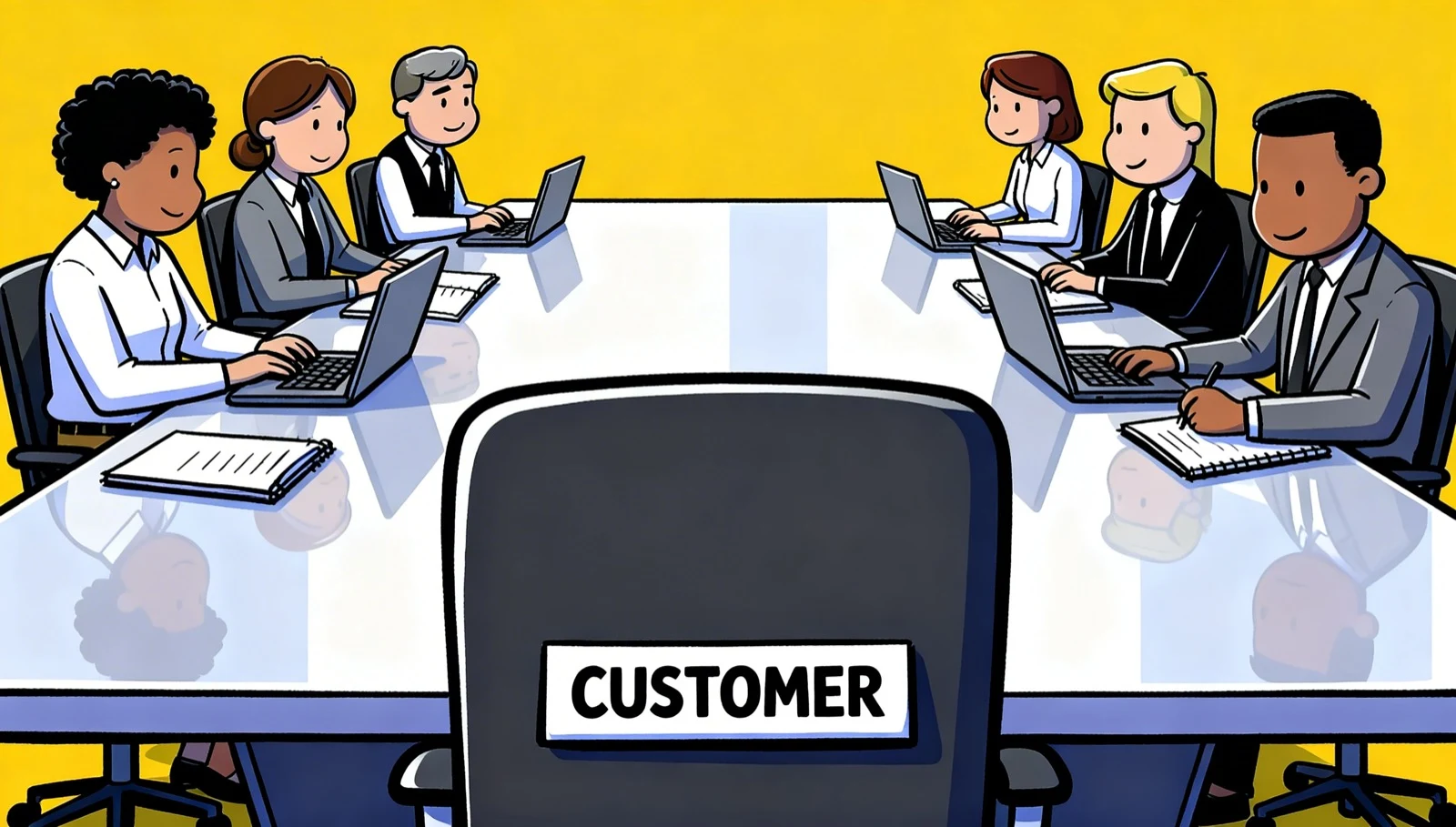 The Empty Chair Fallacy
Why “representing the customer” in the room is harder, and riskier, than leaving a chair empty for them.
The Empty Chair Fallacy
Why “representing the customer” in the room is harder, and riskier, than leaving a chair empty for them.
