
Katie Kavanagh
Customer Success Executive — Wordnerds
Katie hosts the Wordnerds webinar series and chaired this session.
Four layers of customer segmentation beat demographics alone. Watch Wordnerds × British Red Cross on how attitudinal and motivational segmentation give five teams one shared language for supporters.
Created 23 April 2026 · Last updated 8 June 2026
Stack four layers: demographics (who customers are), behaviour (what they do), attitudes (how they think) and motivations (what drives them right now). Demographics alone describe who customers are, not why they choose differently — adding attitudinal and motivational layers, built from customers' own words, explains the why and gives every team one shared language.
The Wordnerds smart-segmentation framework stacks four layers: demographics, behaviour, attitudes, and motivations.
The British Red Cross uses attitudinal segments and a motivational framework built directly from supporters' own words, giving five fundraising and marketing teams one shared language for supporters.
Segment labels are not neutral, so the British Red Cross uses labels (issue specialists, global thinkers, local anchors) that supporters would recognise positively.
Smart segmentation reframes the question from "who are my customers" to "how are my customers right now in this moment".
You'll come away able to move beyond demographic segmentation — to the attitudinal and motivational layers that decisions can actually act on.
You'll learn why demographics alone misclassify segments and how qualitative feedback unlocks four stacked layers, with the British Red Cross as the worked example: how their Voice of the Supporter function built a shared segmentation language across five fundraising and marketing teams, and how supporters' own words feed a motivational framework that evolves over time.
You'll take away a hard reframe: the segmentation question isn't “who are my customers” but “how are my customers right now, in this moment” — the view only attitudinal and motivational data can reach.
Customer Success Executive — Wordnerds
Katie hosts the Wordnerds webinar series and chaired this session.

Customer Success Manager — Wordnerds
Zoe walks through the four-layer smart segmentation framework with worked examples across transport (the effort framework), hospitality (luxury hotel motivations) and social housing (vulnerability flags as temporary states).
Senior Voice of the Supporter Manager — British Red Cross
Emma leads the Voice of the Supporter function at the British Red Cross. She brings the customer case study: how the British Red Cross built attitudinal and motivational segmentation, the shared-language journey across teams, and the practical lessons learned.
Layered customer segmentation is a four-stage framework that stacks demographic, behavioural, attitudinal and motivational data into a single view of a customer. Each layer adds explanatory power. Demographics tell you who customers are. Behaviour tells you what they do. Attitudes tell you how they think and feel. Motivations tell you why they act in this moment. The layers stack rather than replace. A team already running demographic segmentation does not throw it out; they add behavioural data on top, then attitudinal, then motivational, in whatever order matches their available data sources. The four-layer view is what unlocks decisions that work at the individual level rather than the population average. As Zoe Wilson explains in the webinar, "segmentation becomes less about categorising people and more about understanding them and what they need."
Demographic segmentation describes who someone is but not why they make different choices. The webinar illustrates this with two examples. Zoe's 91-year-old grandmother (sofa, golf-on-the-telly) and her newly-retired father (golf course, 10K walks) both sit in the 65-plus age group but have entirely different needs and behaviours. Emma at the British Red Cross sharpens the point with the Ozzy Osbourne and King Charles example: two people with identical surface demographics (male, 77 years old, UK-born, wealthy, lived in a castle, held the title of prince) but attitudes, behaviours and motivations diverge sharply. Treating either as representative of the demographic produces decisions that miss both. The risk Emma names: "when we focus too heavily on the demographics, we risk mistaking who someone is and what they do for what they care most about."
Attitudinal segmentation groups customers by their worldviews, values and moral framing rather than by their demographic characteristics. For the British Red Cross, attitudinal segments capture beliefs like "giving to charity is the right thing to do", "charity starts at home", or "charities in my local area are the most important charities to me". The British Red Cross developed these segments through research with both the UK public and their own supporters, with the strategy and research teams working alongside the Voice of the Supporter function. The output is a short attribution survey of a handful of questions that places a supporter into one of the segments. Once attributed, the segment becomes a filter applied to open-text comments and feedback, so qualitative analysis can be cut by attitudinal cluster. The same segmentation is used by fundraising, by the volunteering directorate and by adjacent teams; the universal language is the point. Zoe at Wordnerds notes that this is the layer most webinar attendees were not yet using, based on the live poll at the start of the session.
Motivational segmentation captures why a customer acts in this moment, separate from the more fixed attitudes that sit underneath. Where attitudes are durable, motivations shift in response to circumstance: a recent news story, the weather on a day, a family event, a worldwide disaster. The British Red Cross built a motivational framework directly from supporters' own words, captured in open-text feedback and analysed in Wordnerds. The framework evolves continuously with new supporter language rather than freezing at a single point in time. In practice, motivational segments include named groups like "issue specialists" (people focused on solving specific problems such as getting food and clean water to people in crisis), "global thinkers" (breadth of care across the world), and "local anchors" (commitment to those in need within their own community). When motivational data joins attitudinal and behavioural data, decisions get sharper: how to position a marathon for runners motivated by memory of a loved one, what to say about food-aid impact to a segment that values that area most, how to position appeals when supporters say in their own words that they want ongoing visibility of the work being done.
The British Red Cross started from a familiar problem: five teams asking five slightly different questions about the same supporters, each with their own definitions, cuts and stories. The duplication of effort fell on data and enabling functions like the Voice of the Supporter team. The shift came from research and strategy work that produced a single attitudinal segmentation usable across fundraising, marketing, volunteering and adjacent directorates. Adopting the new segmentation required active change management. Emma describes the resistance honestly: teams were attached to the way they had been talking about audiences. The strategy and research teams sharing both the current-state problems and the future-state benefits, then working through nuanced needs team by team, was what brought people along. Momentum since launch comes from running use cases publicly across teams, sharing both successes and failures, and keeping the segmentation's motivational layer alive with new supporter language as it lands. The lesson Emma names: "you don't have to have perfection to mean you can progress."
Wordnerds builds an auditable structured data layer from customer feedback—surveys, complaints, reviews and calls. Analysts get the complete picture in Power BI; decision-makers ask questions in chat and get accurate, auditable answers quickly.
Wordnerds turns what customers say into what organisations do. We integrate AI-powered insight from surveys, complaints, reviews and calls directly into Power BI where decisions happen — so everyone in the organisation can act on what customers are saying, not just the insight team.
UK housing associations, local authorities, transport operators and regulated-sector teams use Wordnerds to turn tenant verbatim into board-ready insight and inspection-ready evidence.
The British Red Cross helps people in crisis, whoever and wherever they are. The Voice of the Supporter function uses qualitative feedback, attitudinal segmentation and motivational frameworks to advocate for supporters across every team at the British Red Cross, ensuring supporter perspectives shape decisions even when supporters aren't in the room.
Katie: Our webinar attitudes, not age groups: the power of smart segmentation. It's lovely to see you joining us today. We'll give it a minute or two, let everyone join and get comfortable.
In the meantime, if you want to say hello in the chat, we'd love to hear from you. Let us know your name and where you're joining from today.
Here in Newcastle, we're lucky enough to have the sun shining for what it feels like for the first time in a while. I hope you are all getting some sunshine as well, wherever you are.
Katie: My name is Katie. I'm on the customer success team here at Wordnerds and I'm your host for today.
We're joined by Zoe Wilson, one of our customer success managers. She'll walk us through an excellent framework later in the session.
And also joining us today is Emma Smith, senior voice of the supporter manager at the British Red Cross. Emma will introduce herself properly in a moment. She's here to share insights on supporter segmentation, a topic we know matters hugely to many of you. Emma, it's brilliant to have you here with us, so thank you.
Katie: Section 1 is a story: how the British Red Cross built one shared way of thinking about their supporters across the whole organisation.
Then Zoe is going to take us through a framework for taking segmentation further, so building on what you already have and what becomes possible when you go beyond demographics.
Section 3 is building smarter segments: the practical stuff, data foundations, how you define your segments and how you turn that into action. And then we'll wrap up with "now you can".
Emma Smith: Hi everyone. Great to see you today. Thanks to Wordnerds for inviting me to speak.
I started my career in direct marketing at Cats Protection, then moved into more of an insight-focused role, and now today I am in the Voice of the Supporter function at the British Red Cross. This is the place where I think insight is really created and those data stories can be told.
When I moved into Voice of the Supporter, something really shifted for me. I realised data wasn't just there to prove how we're performing, it was there to advocate for our supporters when they're not in the room.
Emma Smith: So moving on to segmentation. Where did this all begin? Like a lot of things, it began with a bit of a problem, internal but also external to some degree.
Before a universal segmentation, we would have five or six teams asking five or six slightly different questions about a similar group of supporters, all with different definitions and different cuts of the data. The hardest part wasn't just the workload. It was that we were all trying to do the right thing for supporters, but actually pulling in slightly different directions.
Smarter segmentation gave us a light towards a new path: a streamlined set of universal language across fundraising and marketing teams and the wider organisation.
Katie: Emma, thank you so much. I love what you said about data, not just proving performance, it's there to advocate for supporters when they aren't in the room. It's a completely different purpose for segmentation. Zoe, over to you for the framework.
Zoe Wilson: Thanks Katie, and thanks Emma.
We've been thinking about this segmentation approach as four layers, with each one adding further explanatory power. This isn't a hierarchy you need to climb. Instead it's more layers that you can stack and build up to give you that powerful way of deeply understanding your customers.
Zoe Wilson: The first layer is demographics. So who your customers actually are: age, gender, physical location, ethnicity.
We work with a lot of social housing providers; a common segmentation there might be those who live in a flat versus those who live in a house. These categories can be quite binary. They might describe people without necessarily explaining them.
Taking age groups as an example, 65 plus puts my newly retired dad, who is spending all of his spare time on the golf course or out doing 10K walks every day, in the same group as my 91-year-old gran, who is incredible but you'll find her watching golf on the television from the sofa.
Zoe Wilson: Layer two is behaviour. So this is thinking about what people actually do.
Examples might be in retail: which products your customer is buying, which promotions they engage with. More horizontally across all organisations it might be which channels your customers are using to communicate with you. This can tell you a lot about how people are actually interacting with you and your services.
Zoe Wilson: Now building up the next layer, we've got attitudes. So this is considering how people think and feel. Values, worldviews, emotional responses, really a person's why.
You start to understand why two people who buy the same product might be doing it for entirely different reasons. This might be harder to measure consistently. But this is where your qualitative feedback can actually be a really great resource to help you unlock what those attitudes are.
Zoe Wilson: The final layer is motivations. This is why people actually act in that moment.
Whereas attitudes tend to be more fixed, motivations can be more changeable. A person might be influenced by a recent news story or the weather on a day or what their mood happens to be. Motivations help you understand where your customers are at this current moment, and that is where the magic really lies.
Zoe Wilson: For transport companies, a resonant framework can be the effort framework. The journey of travelling on a train, you want to get on the train, arrive where you needed to be, get off the train, and for all of that to be on time. You don't want to expend any extra effort. So measuring how customers express their opinion on that effort expended can give you insight on how to improve.
On the other hand, a luxury hotel: customers would expect that functional need to be met as an absolute baseline. What's motivating them is the prospect of an elevated experience where they feel special. Measuring the welcome, the connection, comfort, calmness, those are more important things to understand to drive action in that context.
Emma Smith: I love the layers and that outline. Just for full transparency, at the Red Cross we are on a journey as well. Some of the examples I share are work in progress. So if you're playing around with segmentation and you have any perspective, please do add it to the chat.
Emma Smith: One example with demographics in mind: a team came to us working on a strategic project about a particular generation, baby boomers. We were able to utilise the age data we had available to tell a story to build into their work. But it felt like something was missing. Let me show you.
Here's a list of demographic information that could be seen as a target audience: male, 77 years old, born in the UK, wealthy. Bear with me as this is an imaginary example, not a Red Cross example, but they also have lived in a castle and they've held the title of prince at some stage in their life. So imagine this person, and what kind of feedback they might give.
But what if I then showed you a couple of images: both Ozzy Osbourne, rest in peace, and King Charles meet that target audience. The trends still stand to some degree, but it would be more nuanced for them and probably nuanced based on their attitudes and what they value most deeply.
When we focus too heavily on the demographics and the behaviour, we risk mistaking who someone is and what they do for what they care most about.
Emma Smith: So let's move on to attitudes. These are people's worldviews, moral framing or priorities.
For charities, this might include attitudes like "I believe giving to charity is just the right thing to do", or "I think charity starts at home", or "charities in my local area are the most important charities to me".
At the Red Cross, we worked with various different teams across the organisation, including research and strategy, to set about exploring the attitudes through really thorough research with both the UK public and our supporters. We now have a much shorter survey of just a handful of questions which can help us attribute, quite simply, which group a person most likely falls into. So we can understand who we are attracting to support our cause areas and how those segments play out right across the organisation.
Emma Smith: Motivations have always been a special area of interest to me. My values might run deep. I might care really a lot about the things your organisation does, like if it's helping the local community.
But there might be a particular thing that is more special about why I choose your organisation today instead of another organisation. And that almost also might differ to the timing. So it might be different if it was in two weeks' time to how it was last month. This is the kind of information that can help position what we offer and better understand our organisational strengths.
Emma Smith: Here's a couple of quotes from real supporters explaining in their own words what motivates them.
The one on the left says "I didn't know you were in Ukraine still until I saw this Facebook advert. Thank you." On the surface this might sound straightforward, but it signals the importance of ongoing visibility of the work we're doing.
And on the right: "they donated because the Red Cross are effective, have a long history of trust on both sides of the conflict. Overall, they're a sign of hope for all in distress." This supporter tells us what gives them confidence in their own words.
Initially this just started as sharing a few quotes in decks. But now we've built and developed a motivational framework in Wordnerds, directly from supporters' own words. So it's ever evolving with what the supporters tell us.
Emma Smith: Thinking beyond the data, I want to spend a moment on the language we use with segmentation frameworks.
Segment labels aren't always neutral even though they could be intended to be. They hold significant power because this influences how your team might speak about supporters, whether they're prioritised, and ultimately how those people might be treated. If a segment label makes us less empathetic or more dismissive, it's probably the wrong label.
For us at the Red Cross this was a really critical step. How would you feel if you saw one of these names next to your name? Our segment labels (issue specialists, global thinkers, local anchors) are positive descriptors that supporters would recognise themselves in.
Emma Smith: So what can happen next with this kind of data? Sometimes I think of this like a puzzle. You might not have all of the hundred pieces or thousand pieces, but you can see the picture even when there are some gaps. So when you add more puzzle pieces you can see a lot more of the bigger picture.
Where we can, we plug our open-text comments and the associated metadata (an attitudinal segment or a behavioural one) into Wordnerds to analyse the sentiment and themes, and start to filter and layer those segments. Quotes stop being just a single anecdote and start to become patterns.
Emma Smith: This is where the magic starts to happen.
One example: how to position running a marathon for our charity when one of our segments loves social connection with like-minded people who care about the same issues, and their motivation to run is in memory of a loved one. We also know runners want more cheer points along their route. When you combine all that information together it becomes really powerful.
Another example: should we speak more about getting food to people who need it in crisis and the impact of the donation? Because one segment values that area of work most and often tell us they don't understand where their money is going.
Thirdly, this also makes our team more confident: confident that the message is relevant and that we're spending money wisely to reach people who are most likely to be interested.
Katie: Emma, thank you so much. I really loved your point about segment labels not being neutral and the language you use to describe people shapes how your teams think about them.
Zoe Wilson: First question: this sounds advanced, at the moment we only have age groups. That's a really great starting point. Those demographic examples remain the critical foundation that you need to be able to build on. A lot of those more concrete demographic segments are going to remain vitally useful.
Second question: what should my segments even be? A great place to start is using your existing demographics alongside your qualitative feedback that you already have from your customers. In Wordnerds, you can filter by metadata to understand your different groups' feedback at that deeper level, just as Emma described. The qualitative data is what you can use to actually understand where the differences lie.
Zoe Wilson: Three things you could do this week.
First, audit your layers: how many of the four do you currently cover, and what might you be missing?
Second, filter your text by your existing segments. Your customers are actually already volunteering information about their attitudes and motivations, even if you're not asking them directly.
Third, pick one of those demographic segments and peel back the layers to understand whether it is really fixed. Taking vulnerabilities as an example: a vulnerability flag from your CRM is really important, but it can often be a temporary state that might shift depending on time and circumstances. That's where you might need that attitudinal data to actually see that live in real time.
This is how you can reframe from "who are my customers" to "how are my customers right now in this moment".
Katie: First question is from Patricia. Did you face any resistance internally when trying to get all the same shared language and segmentation approach?
Emma Smith: Yes, we did face resistance. It certainly wasn't that people disliked segmentations, most of the team are marketers and they live and breathe that kind of stuff. But teams were attached to the way they had been talking about audiences. Most people were worried that a segmentation wouldn't really work for them. Our strategy team and research team did a great job of sharing the current state and common issues, then the future state of how it would be different and how it would benefit different teams, then took a lot of time to work together with individual teams. Time commitment, those are the things that really mattered.
Katie: Next question is from Kelly. Our data is in different places. Surveys are through SurveyMonkey, but other information is in our CRM. Do you have any recommended method or order for centralising it?
Zoe Wilson: A good place to start is auditing your data in general and looking at which data sources you hold and where they live, then making your priority based on what your priorities are at an organisational level. With surveys, it might make most sense to start with transactional surveys rather than perception surveys because you are getting more in-the-moment feedback. When it comes to centralising, using Wordnerds is a really powerful way to do that because it allows you to consistently structure how you're understanding the feedback across different sources.
Katie: Next question from Mattie. How do you apply attitudinal motivation to social housing tenants given that there is a universal implication as to what motivates most social housing residents, like affordability and social safety net?
Zoe Wilson: Considering how you actually receive that feedback from your customers can be a good place to start. With social housing being a regulated industry, it's still really important to understand how satisfied your customers are. We did a piece of work recently looking at fairly satisfied versus very satisfied groups, linked into the effort framework, and that unlocked a lot of valuable data on how to improve overall customer experience and satisfaction.
Katie: Dan asks: did your data segmentation require adopting new systems?
Emma Smith: For us the segmentation didn't require adopting new systems. We utilised the systems we had. Behavioural data was already in our CRM. For attitudinal, we asked those questions through surveys and then imported that information once we knew the segments. The benefit of Wordnerds is that information can be combined, aggregated and filtered down.
Katie: Martin asks how long does segmentation data remain current under GDPR?
Emma Smith: Depends on the kind of segmentation. Behavioural is live in our database and constantly updating to be as accurate as possible. And it would be treated like any other kind of information we're storing under GDPR.
Zoe Wilson: There's not one single answer. It's going to depend on the type of data, where it's stored and how that relates to your own data management policies.
Katie: Maddie says momentum is our issue. We did a segmentation exercise a while ago using an external partner and it's not really been used properly.
Emma Smith: Keeping it engaging by making it useful in real decisions is really important. Part of that is the time and commitment to refreshing the story, and showing other teams' use cases so they can see the value and be inspired by people's successes (and being open about failure). That's the way to keep it going.
Katie: Well guys, that brings us to the end of the webinar. Thank you so much for sending in your questions. Emma, Zoe, thank you so much.
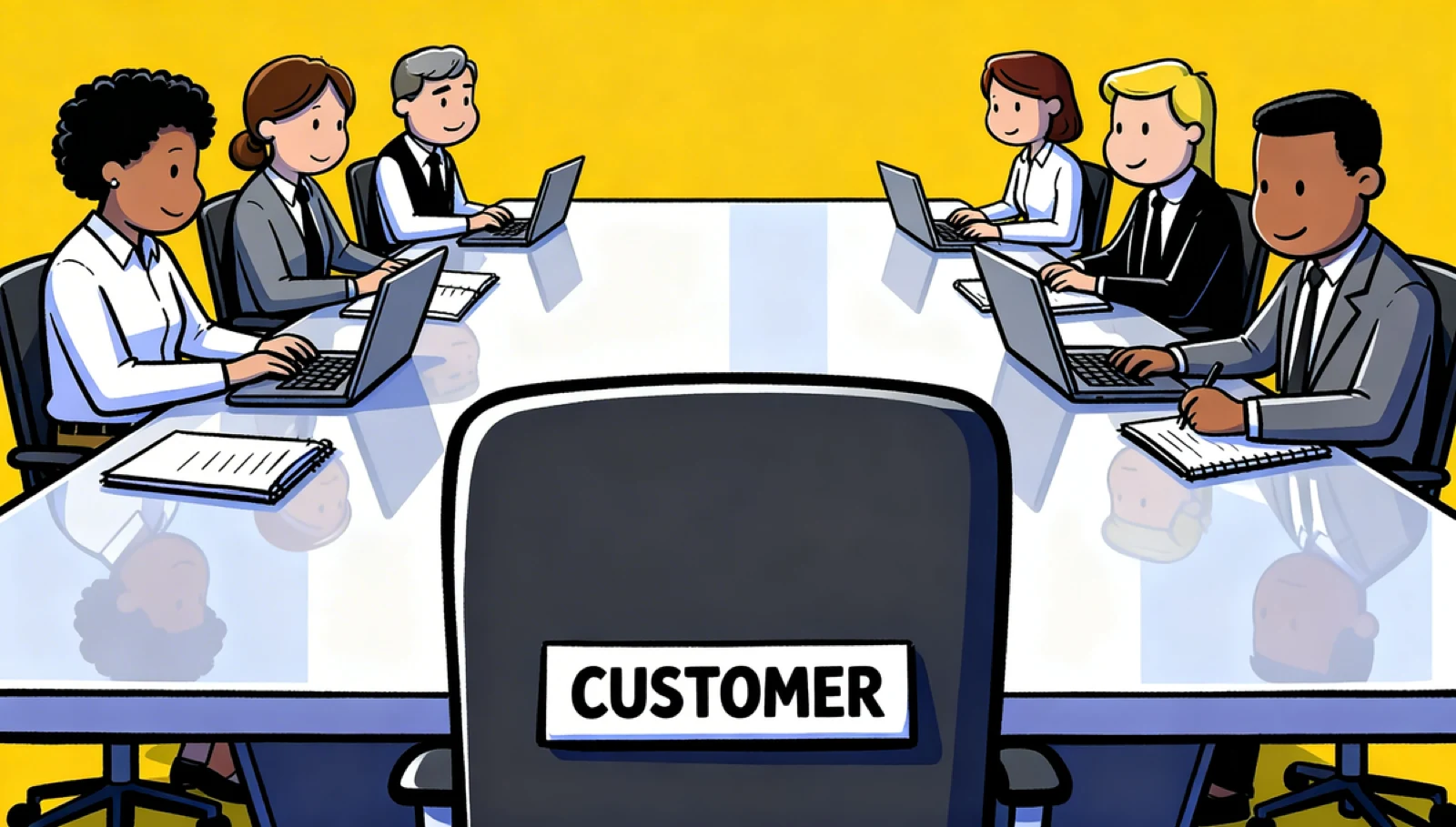 How do you move from owning Voice of Customer to facilitating it? The Customer Always in the Room
Facilitating Voice of Customer means the insights team becomes the architect who lets colleagues find their own answers, not the gatekeeper who produces every report.
How do you move from owning Voice of Customer to facilitating it? The Customer Always in the Room
Facilitating Voice of Customer means the insights team becomes the architect who lets colleagues find their own answers, not the gatekeeper who produces every report.
 Can you predict your Consumer C rating? Four tenant-feedback signals
Four tenant-feedback signals predict your Consumer C rating before the Regulator visits.
Can you predict your Consumer C rating? Four tenant-feedback signals
Four tenant-feedback signals predict your Consumer C rating before the Regulator visits.
 How do you prepare for the Welsh HHSRS hazard rollout in April 2026?
From 1 April 2026, every Welsh housing association must monitor all 29 Housing Health and Safety Rating System (HHSRS) hazards from day one.
How do you prepare for the Welsh HHSRS hazard rollout in April 2026?
From 1 April 2026, every Welsh housing association must monitor all 29 Housing Health and Safety Rating System (HHSRS) hazards from day one.

So you're reading the footer now? Either you ❤️ Wordnerds or you're desperate for something to read. Either way, CX Corner from Wordnerds is the answer. Fortnightly Voice of Customer bombs dropped in your box. Signup 👇 or find out more.