Copilot or Wordnerds for customer feedback analysis? What each does well
Fair question. If Copilot analysed customer feedback reliably, we'd use it too. For a quick summary of a few dozen comments, it does the job.
Wordnerds turns what customers say into what organisations do. We integrate AI-powered insight from surveys, complaints, reviews and calls directly into Power BI where decisions happen—so everyone in the organisation can act on what customers are saying, not just the insight team.
Why not Copilot? Helen and Pete explain
Wordnerds' Helen Precious and Pete Daykin on where a general-purpose chatbot helps with customer feedback, where it falls short, and what to reach for instead.
Can I use Copilot to analyse my customer feedback?
Copilot and ChatGPT are good for a one-off summary of a small batch of comments. For analysis you take to a board or a regulator, a general-purpose chatbot struggles: it can't hold consistent categories, count reliably, or leave an audit trail, and the cost climbs fast at volume.
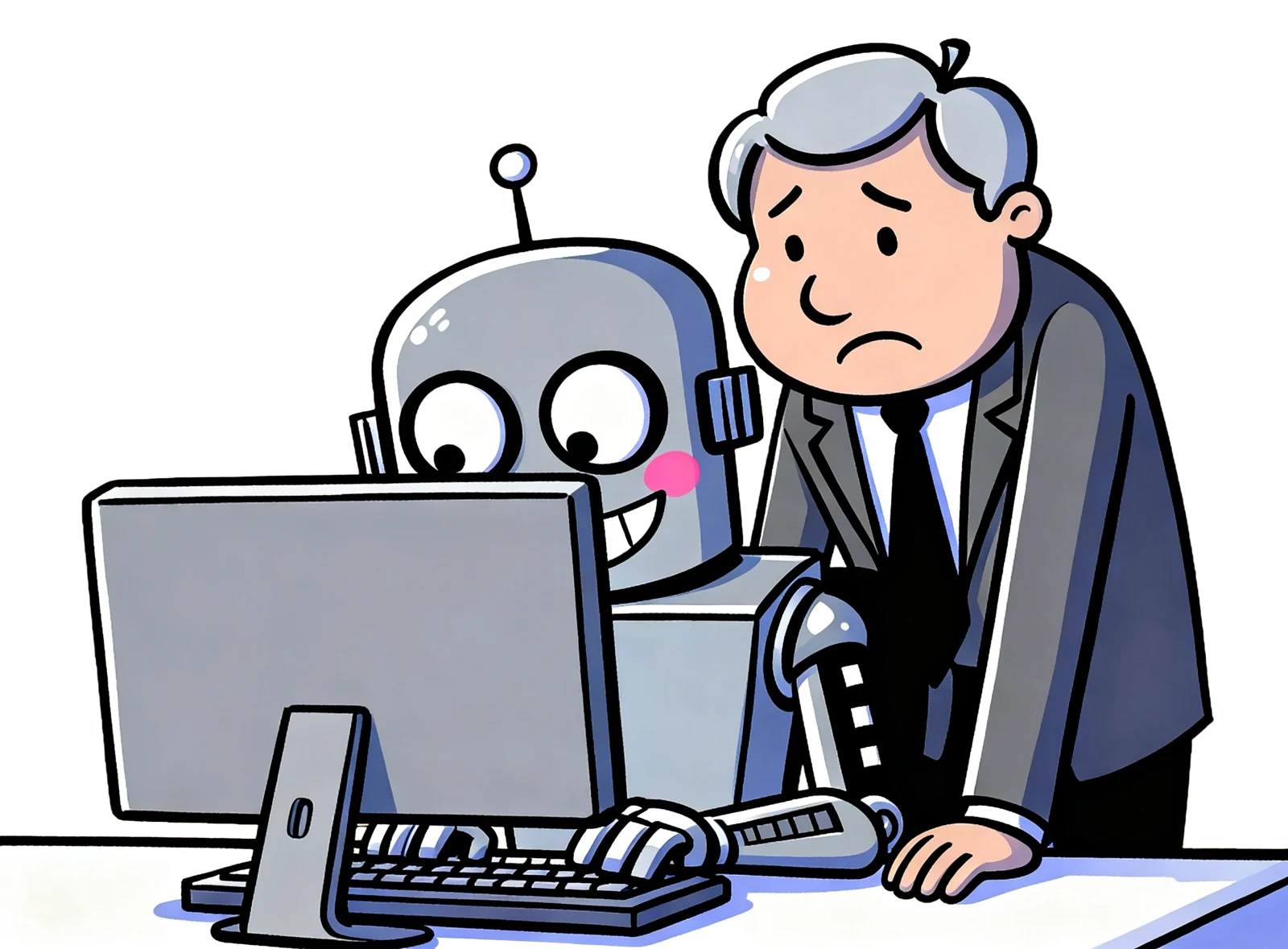
Most teams try a chatbot first, whether that's Copilot, ChatGPT or Gemini. It's already in the browser tab, it's fast, and the first summary looks convincing. Run it again next quarter and the categories have shifted, the counts don't reconcile, and when someone asks how a number was reached, there's nothing to show. You're left with a confident answer you can't stand behind.
For a quick look that's no great loss. But the moment the analysis has to inform a decision, feed a board paper or answer a regulator, guesswork stops being good enough, and you need to know exactly how every number was reached.
Why does AI struggle with raw customer feedback?
Which layer you apply AI at decides whether you can trust the output. On raw, unstructured feedback, a general-purpose model estimates rather than counts and re-categorises on every run. On a structured, classified layer beneath it, the same model returns consistent, auditable answers. Wordnerds builds that structured layer.
A generative model works by predicting plausible text. That is the right tool for drafting and summarising. For measurement it falls short: it can't return the same categories in January and December, and it can't tell you how many comments mentioned an issue without estimating.
Wordnerds fixes the categories first. Analyst-authored definitions are applied by small classification models, so every comment is sorted the same way every time and every theme traces back to the words a customer used. A chatbot can then query that structured model reliably, because it is reasoning over classified data rather than raw text.
How does Wordnerds compare to Copilot for feedback analysis?
Copilot is a general-purpose assistant; Wordnerds is a dedicated feedback-analysis platform. They compare on the criteria most teams weigh up: what each is built for, consistency, scale, accuracy, auditability, tracking over time, and where the results end up.
| Criterion | Copilot / generic AI | Wordnerds |
|---|---|---|
| Best for | Quick summaries, drafting and first-pass exploration | Consistent, auditable analysis at scale and over time |
| Consistency | Answers can change from one run to the next | The same comment is classified the same way every time |
| Scale | Fine for hundreds of comments; strains beyond that | Handles millions of comments across every channel |
| Accuracy on sentiment | Around 76–79% in independent benchmarks | Higher with analyst review, and every result is checkable |
| Audit trail | No record of how it reached an answer | Every theme traces back to the comments behind it |
| Tracking over time | Each analysis starts from scratch | Fixed definitions, so periods compare like for like |
| Where results live | In the chat window | In your own Power BI, alongside the rest of your data |
| Cost at scale | Per-token pricing that climbs with volume | Predictable, whatever the volume |
Copilot and ChatGPT are strong at quick summaries, drafting and exploring. This compares a general-purpose assistant with a dedicated feedback-analysis platform on the criteria teams weigh at scale, as of July 2026.
Where is AI the right tool for feedback analysis?
We're not anti-AI. Wordnerds runs on it, applied where it works. Small, trained classification models are a different technology from a general-purpose chatbot, and they do a different job.
-
Building the classification
LLMs generate the training examples for the small models that classify your feedback, so the taxonomy your analysts author scales across millions of comments without manual tagging.
-
Answering questions on the data
Once feedback is structured, a Copilot-style chat can query it in plain language and return answers you can rely on, because it is reasoning over classified data rather than raw text.
-
Getting insight to everyone
Insight goes straight into Power BI where teams already work, so anyone can act on what customers are saying without logging into another platform or learning to prompt an AI.
When should you use Copilot, and when do you need Wordnerds?
It comes down to the job in front of you. Each tool is the right call for different work.
| Your situation | Copilot / generic AI | Wordnerds |
|---|---|---|
| A one-off summary of a small survey | The quickest way to get the gist of a few dozen comments | More firepower than a one-off really needs |
| Exploring feedback to form a hypothesis | Ideal for a fast, informal first look at what's there | Comes into its own once you know what you want to measure |
| Drafting a write-up from findings you already have | A real time-saver for a first draft you'll edit | Not what it's built for |
| Reporting to a board or a regulator | No audit trail to stand behind if you're challenged | Built for evidence you can defend, with every number traceable |
| Tracking whether an issue is improving | Can't reliably compare one run against the last | Fixed definitions let you compare period to period |
| Analysing thousands of comments across channels | Slows down and gets costly at that volume | Designed to run at scale, consistently, every time |
How accurate is specialist classification compared with generic AI?
Independent benchmarks put general-purpose AI sentiment accuracy at roughly 76 to 79%. Wordnerds trains a model on your analysts' own theme definitions and checks its output, so it's more accurate than a general-purpose chatbot and every classification traces back to the comment behind it. On regulated feedback, that traceability is what lets you defend a number instead of hoping it's right.
That is what changes when the analysis is built to be defended. When a board member or an ombudsman asks how you reached a number, you can show the definition, the model, and the source comments behind it. Your insight team stops re-checking the machine's work by hand and gets back to the analysis only they can do.
Analysis your whole organisation can act on, and stand behind.
Common questions
Does Wordnerds replace Copilot?
No. They do different jobs. Copilot summarises and drafts; Wordnerds classifies feedback into consistent, auditable themes and quantifies them. They also work together: once we have built the structured layer, a Copilot-style chat can query it reliably. Copilot is the conversation; Wordnerds is the evidence underneath it.
Does this apply to ChatGPT, Gemini and Claude too, or just Copilot?
The same applies to any general-purpose AI. Copilot, ChatGPT, Gemini and Claude are all strong general assistants, and they share the same limits on feedback analysis: they estimate rather than count, re-categorise on each run, and can't show their working. Whichever one you use, you run into the same limits at scale.
Is ChatGPT or Copilot accurate enough to analyse customer feedback?
For a quick summary, yes. For analysis you will act on, less so. Independent benchmarks put general-purpose AI sentiment accuracy at around 76 to 79%, and a chatbot estimates counts rather than counting them. A model your analysts train and check does better, with every theme traceable to the source comment.
Why pay for Wordnerds when Copilot is included in Microsoft 365?
Copilot is free at the point of use, but it can't hold consistent categories, count reliably, or show its working, and running it across thousands of comments gets expensive per token. Wordnerds adds the structured, auditable layer the licence you already own cannot produce on its own.
Who is liable if the AI gets the feedback analysis wrong?
Accountability stays with your organisation, so you need to show how a conclusion was reached. Wordnerds is built for that: analyst-authored themes, every classification traceable to the comment behind it, defensible to a board or a regulator. A black-box summary leaves you with nothing to show.
Can I use Copilot together with Wordnerds?
Yes. Wordnerds builds the structured, classified layer, and a Copilot-style agent then answers questions on it in plain language. AI is reliable when it reasons over an auditable model rather than raw feedback, so the two work together well.
