What is doing nothing costing you?
'Not now' is a fair answer, and an easy one to reach. You already collect the feedback, no one's banging the table about it, and doing it properly takes budget and a change of habit. So it waits. But the status quo has a price of its own, and it rarely shows up anywhere obvious.
Wordnerds turns what customers say into what organisations do. We put feedback to work in Power BI, so your whole organisation can act on it, not just the insight team.
Isn't our current approach to customer feedback good enough?
Doing nothing is the biggest hidden cost most feedback programmes carry. Carrying on as you are means analyst time lost to manual sorting, churn signals missed, and the same complaints recurring because nothing surfaces them. With Wordnerds, that same feedback becomes decisions your whole organisation can act on.
Most feedback programmes don't stop because someone decides they're not worth it. They stall. The surveys keep going out, the dashboard keeps updating, the results get a nod in a meeting. Then nothing changes because of them. Over a couple of years that becomes the normal state: data collected, rarely used. It's the feedback graveyard, and almost every organisation has one.
It rarely feels like a decision, which is exactly why it's the most common one. More feedback programmes drift into carrying on as they are than are ever lost to a competing tool. The cost never shows up on a budget line. It's the churn you didn't see coming, and the fix that arrived a year late.
How much does it cost to not analyse your customer feedback?
Over a year, doing nothing rarely costs nothing. It shows up as analyst hours lost to manual sorting, churn signals spotted too late, risks caught after they've landed, and a feedback programme that struggles to prove its worth. Wordnerds turns each of those costs into something you can act on.
| Over 12 months | Carrying on as you are | With Wordnerds |
|---|---|---|
| Analyst time | Skilled analysts spend weeks hand-sorting comments into themes | The same themes are applied automatically, freeing analysts for work only they can do |
| Churn & revenue signal | Recurring problems surface late, after customers have already left | Emerging issues are visible as they build, while there's still time to act |
| Risk & regulation | Issues are found once they've become a complaint, a fine, or a headline | Patterns are caught early, with evidence you can put in front of a regulator |
| Proving the programme | The feedback budget is first in line when money's tight, because it can't show its value | Insight tied to decisions and outcomes makes the programme straightforward to defend |
| Tracking over time | Each analysis starts from scratch, so you can't tell if anything improved | Fixed definitions let you compare like for like, year on year |
| A small, one-off dataset | For a few dozen comments, a quick manual read is enough | More capability than a small, one-off dataset needs |
What changes when you actually act on your feedback?
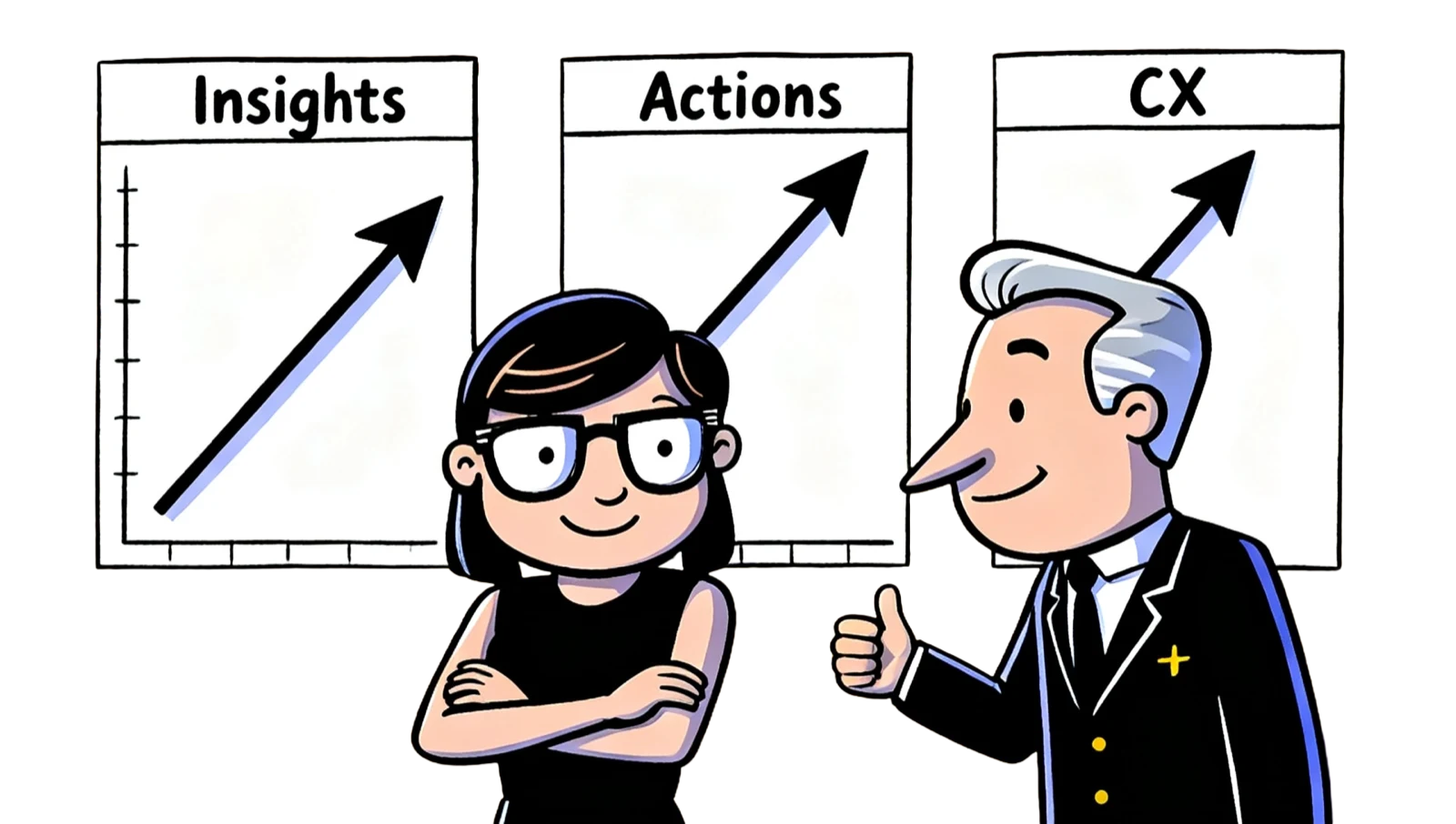
Feedback you don't act on ages fast. Acted on, the same feedback keeps paying back, teaching you something new every round.
-
From signal to decision
We build the pathways that turn a theme into an operational change someone owns, so feedback drives what you do next instead of ending as a slide the board nods at.
-
Not just the insight team
Answers reach the people who act on them: plain language for the frontline, full detail for analysts. Insight stops being stuck with whoever owns the dashboard.
-
Where you already work
Feedback lands natively in Microsoft Power BI, alongside your other numbers, so anyone can see what customers are saying without another login or a data request.
When is doing nothing the right call, and when have you outgrown it?
An honest test. For each row, which column sounds more like you? The more your answers sit in the right-hand column, the more the status quo is costing you.
| Signal | Doing nothing is fine | You've outgrown it |
|---|---|---|
| Feedback volume | A few dozen comments you can read yourself | Thousands, across surveys, calls and reviews |
| Your process today | Already drives real decisions | Produces reports nobody acts on |
| What you need | A one-off answer, once | To track the same issues over time |
| Recurring problems | Rare, and handled as they come up | The same complaints back every quarter |
| Scrutiny | No one's asking you to prove it | A board or regulator asks how you know |
What do organisations get back when they stop doing nothing?
The gain shows up as decisions you can defend. Because Wordnerds classifies feedback the same way every time, you can show which change moved which metric, name the issue behind a rising complaint, and prove to a board or regulator exactly how you got there.
That's what acting on feedback buys you: fewer surprises. The churn signal caught in month three, not month nine. The complaint theme fixed before it reaches the regulator. An insight team freed from re-checking numbers by hand, back on the work only they can do.
Feedback your whole organisation acts on, with the evidence to back every call.
Common questions
How much does it cost to not analyse your customer feedback?
There's no single invoice for it, which is exactly why it's easy to miss. The cost shows up as analyst hours lost to manual sorting, churn signals caught too late, risks found once they've already landed, and a feedback programme that struggles to justify its budget. Most of it is avoidable.
Isn't our current survey or dashboard process enough?
Sometimes. A dashboard shows you the score moved; it rarely shows you why, and a survey platform triggers feedback it can't turn into action. If your process already changes what you do, keep it. If feedback keeps arriving and nothing changes because of it, you've outgrown it.
What's the risk of waiting another year to act on customer feedback?
A year of feedback you don't act on is a year of the same complaints recurring, churn you don't see coming, and, in regulated sectors, evidence you can't produce when you're asked for it. The cost compounds, and the programme gets harder to defend the longer it runs without a result.
When is doing nothing actually the right call?
When your feedback volume is low, your current process already drives real decisions, and there's no regulatory pressure on the horizon, staying put is reasonable. The honest test is simple: if feedback keeps arriving and nothing changes because of it, you've outgrown doing nothing.
What is Wordnerds?
Wordnerds turns what customers say into what organisations do. It analyses feedback from surveys, complaints, reviews and calls, then delivers the insight into Microsoft Power BI where decisions happen, so every team can act on what customers are saying, not just the insight team.
