 What 26,119 pieces of customer feedback couldn't tell us
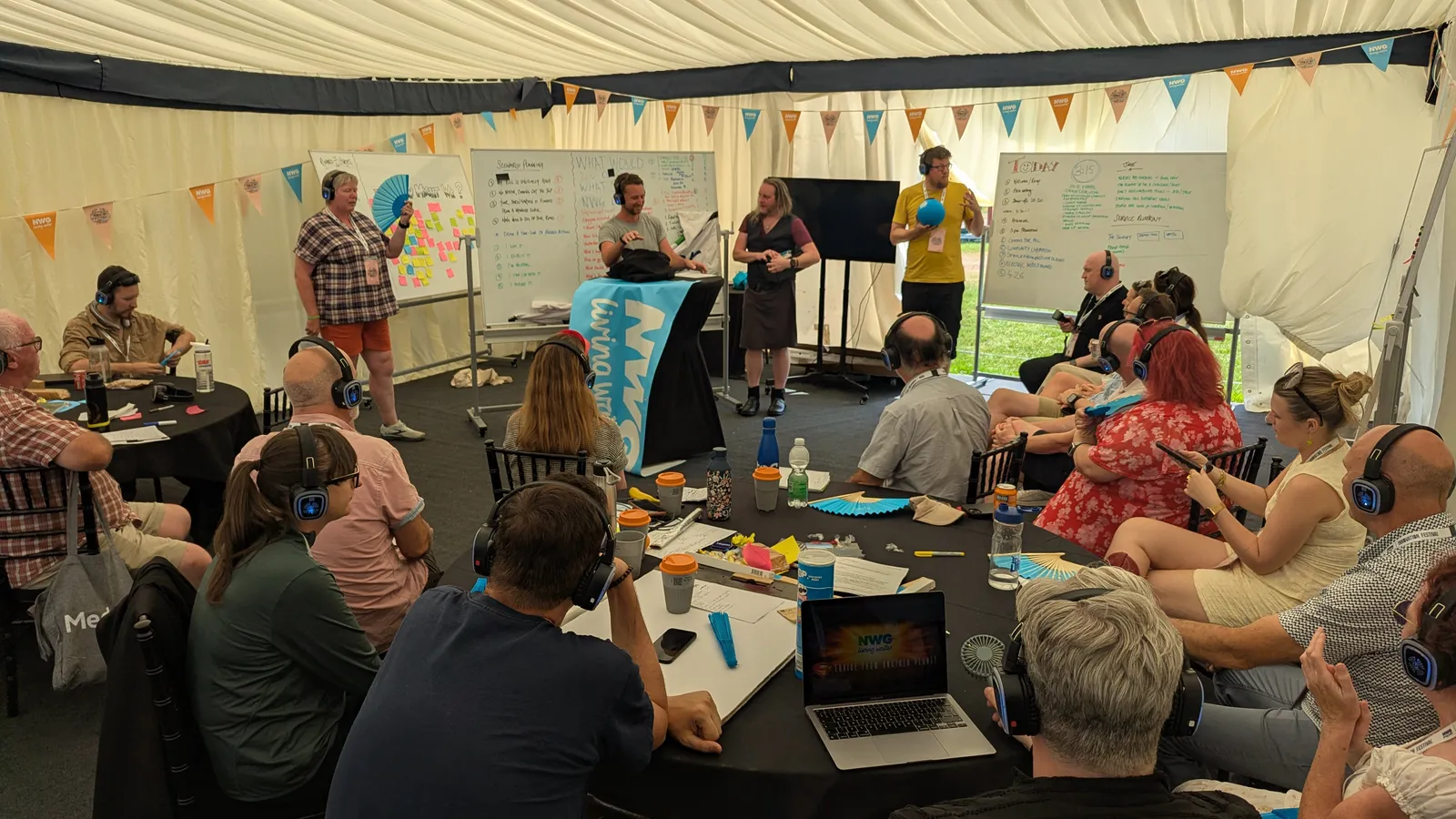
Explain ran a four-day deliberative sprint with 27 Northumbrian Water customers while we analysed 26,119 pieces of their feedback alongside it. Fourteen of the group's 45 ideas had no trace in the data at all.
What 26,119 pieces of customer feedback couldn't tell us
Explain ran a four-day deliberative sprint with 27 Northumbrian Water customers while we analysed 26,119 pieces of their feedback alongside it. Fourteen of the group's 45 ideas had no trace in the data at all.
Reading Customers Right
The Wolverhampton Paradox: why better repairs figures didn't win the better RSH grade
On 28 January 2026, the Regulator of Social Housing published judgements for City of Wolverhampton Council and Bournemouth, Christchurch and Poole Council. Wolverhampton's repairs and complaints figures were stronger on every measure. BCP got the better grade.

 Written by Sarah Wilson
Created
On 10 September 2026, Wordnerds ran a webinar called Inside a Consumer Standards Inspection. Our Chief Scientific Officer, Steve Erdal, shared what we've learned from analysing every consumer standards judgement the Regulator of Social Housing has published, and our guest, Andrew Bryant, Head of Landlord Services at City of Wolverhampton Council, walked us through his council's inspection from the first phone call to the final grade. Andrew was incredibly open about what went well and what didn't, and the comparison at the centre of Steve's section deserves more room than a webinar slide gives it. So here it is, written up properly.
At Wordnerds, a lot of our work with housing providers is about getting ready for inspection, so we spend a lot of time on what the regulator writes when it hands out a grade. We first named the Wolverhampton Paradox back in May, in our Predict Your C Rating webinar with Housemark. It has stayed with us since, because it asks a question every landlord preparing for inspection wants answered: if strong numbers don't win the grade, what does?
Does repairs and complaints performance decide your RSH consumer standards grade?
Not on its own, going by the regulator's own judgements. On 28 January 2026, City of Wolverhampton Council was graded C2 and Bournemouth, Christchurch and Poole Council C1, even though Wolverhampton's repairs and complaints figures were stronger on every measure. What separated them was evidence that the landlord had found its own problems and was acting on them.
Good numbers still matter. Getting 95% of repairs done on time across more than 21,000 homes takes years of work from a lot of people, and anyone would be proud of figures like that. The regulator treats them as the starting point, though, and decides the grade on what sits behind them.
How did Wolverhampton and BCP compare?
| Measure | City of Wolverhampton Council | Bournemouth, Christchurch and Poole Council |
|---|---|---|
| Homes owned | More than 21,000 | Roughly 9,550 |
| Emergency repairs completed on time | 98.7% | 94% |
| Non-emergency repairs completed on time | 95.4% | 82% |
| Stage 1 complaints within Housing Ombudsman timescales | 98.9% | 94% |
| Stage 2 complaints within Housing Ombudsman timescales | 100% | 96.7% |
| Consumer standards grade | C2 | C1 |
| Judgement published | 28 January 2026 | 28 January 2026 |
Figures as reported in each council's RSH regulatory judgement (Wolverhampton, BCP): Wolverhampton's for 2024/25; BCP's repairs at the time of inspection and its complaints for 2025.
Wolverhampton is ahead on every performance line in that table. BCP is the smaller landlord, and this was its first consumer standards grade under the current regime. Its non-emergency repairs figure trails Wolverhampton's by more than 13 percentage points, and it still came out a grade higher.
Why did Wolverhampton get a C2?
The judgement names the weaknesses, and every one of them is about evidence. The C2 relates to the Safety and Quality Standard. The council had carried out a physical stock condition survey on around 40% of its homes in the previous five years, and the regulator concluded that "the lack of up-to-date stock condition survey information on more than half of its stock is a weakness that the council needs to address". It also asked the council to "further improve the quality and consistency of its information management", and to broaden what it knows about tenants' diverse needs.
Andrew was just as candid on the webinar. When the council self-referred in June 2025, he told us, only 22% of its homes had an in-person stock condition survey, and the team admitted that for all their work with tenants, "we weren't very good at evidencing outcomes". In January 2025, they thought they were heading for a C3.
We feel that the self referral was the thing that got us a C2 rather than a C3, because we identified all of those issues beforehand.
Andrew Bryant, Head of Landlord Services, City of Wolverhampton Council
So the paradox has a second half. Gaps in the evidence held Wolverhampton's grade back, and finding those gaps first stopped it slipping further. We'll tell the self-referral story properly in a follow-up piece.
What did the regulator say about BCP?
BCP had problems of its own. It self-referred to the regulator in June 2024 over overdue remedial actions relating to fire, electrical and water safety, and the judgement records that BCP "was able to quickly resolve the issues and implement appropriate mitigations in the meantime". The reasoning for its C1 is about how it handles issues like that one:
The landlord has demonstrated that it identifies when issues occur and puts plans in place to remedy and minimise recurrence.
RSH regulatory judgement, Bournemouth, Christchurch and Poole Council, 28 January 2026
On culture, the two councils are almost word for word the same. BCP's judgement describes "a respectful, fair and positive culture evidenced towards tenants by both officers and councillors". Wolverhampton's says:
Wolverhampton Council demonstrated a respectful, fair and positive culture towards tenants.
RSH regulatory judgement, City of Wolverhampton Council, 28 January 2026
So the culture was never the difference. BCP could show it spotted issues, fixed them and kept them from coming back, and Wolverhampton was still building that evidence.
Is Wolverhampton a one-off?
The regulator's May 2026 judgements carried the same pattern. Salford City Council was praised for "an effective, efficient, and timely repairs service" and "a proactive approach to identifying, responding to, and resolving damp and mould", and was graded C2. The weaknesses were about evidence and tenant voice: scrutiny reviews that needed to be tenant-led, and tenant information that "is incomplete and not routinely updated". Milton Keynes City Council reported 99% of routine repairs attended to within timescale and was also graded C2, with the regulator noting that most opportunities for tenants to influence services "have only been developed over the past 12 months".
The flip side showed up in the same batch. Stockport Metropolitan Borough Council self-referred in December 2025 over overdue fire remedial actions, "acted quickly to implement appropriate mitigations", and was graded C1.
We've also looked at this from the tenants' side. Working with Housemark, we analysed roughly 135,000 tenant satisfaction survey comments from 18 housing associations against their eventual consumer standards grades. We found no statistically significant relationship between operational performance and the grade a landlord received.
That's an uncomfortable finding if you've spent the last year improving repairs turnaround times expecting it to move your grade. It might not.
What are the 228 judgements actually rewarding?
By September 2026, Steve and the team had analysed all 228 consumer judgements published since the regime began in April 2024, which comes to close on half a million words of the regulator explaining its decisions. Two patterns run down through the grades.
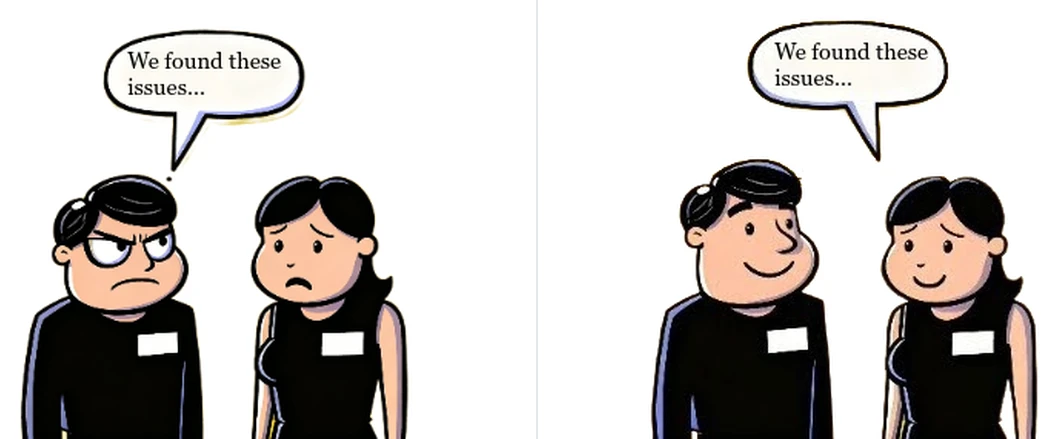
The first is who found the problem. In C1 judgements, the regulator writes much more about what the landlord identified and explained. In lower-graded judgements, it writes more about what the regulator itself noticed. The second is a single word. The word used more in C1 judgements than in any other grade is "evidence", almost twice as often as in C3s.
Steve summed it up on the webinar:
You are not being graded based on whether or not you have problems. Everyone has problems. What you are often graded on is whether you found them and presented them to the regulator, or if the regulator found them.
Steve Erdal, Chief Scientific Officer, Wordnerds
He described it as a race that starts the moment the inspection notice arrives. The regulator does a lot of desk research before it ever visits, and you want your list of issues in front of the inspectors before theirs is.
Do the numbers matter at all?
They do, and the strongest argument against everything above is that numbers are evidence too. A 95% repairs figure tells an inspector something real about a landlord, and nobody should read this as permission to let performance slide.
Islington shows the other side of the argument. The London Borough of Islington was graded C3 in May 2026. Its judgement praised officers and councillors for "a fair and respectful culture towards tenants", and found serious failings in its understanding of its homes: stock condition information had been collected for around 13% of homes at the time of inspection. A good culture couldn't make up for data the council didn't have.
When we first presented the paradox in May, we put it this way: the pattern isn't culture over numbers, it's both. You need data you can stand behind, and you need to show that what tenants tell you has changed something. The numbers get you into the conversation, and the evidence behind them decides the grade.
What does this mean for your evidence base?
If your grade doesn't follow your dashboard, it's worth building your case around something that does. Steve's analysis and Andrew's experience point to three habits.
Find it before the regulator does. Most of what an inspector will ask about is already sitting in your tenant satisfaction survey comments and complaints. Nobody has perfect data, as Steve said on the webinar, but the information you need is usually in the comments you already hold.
Write it down, with a plan and a date. Wolverhampton now has a stock condition programme aiming for 100% by March 2027, and it's currently just under 60%. The regulator asks about it regularly. Andrew's advice was to be realistic with the regulator and with tenants, and not to over-promise.
Show what changed for tenants. Andrew's closing point on the webinar is the one we keep coming back to: "there's got to be an outcome for tenants because if not, we're just ticking boxes".
What happens if you wait for the inspection notice?
Waiting costs you the head start. Andrew's call came on Monday 4 August 2025, and the council had seven days to send the regulator context information about its housing. Anything below C1 means, in Andrew's words, "a protracted period of engagement" with the regulator. For Wolverhampton that's a provider improvement process, and the inspection team told Andrew directly that "standing at C2 is not acceptable". The landlords who come through that well are the ones whose list of weaknesses already exists, in their own words, with an owner and a date against every item.
Full disclosure: this is exactly what we do for a living. We categorise the feedback and complaints you already hold, find the issues before an inspector does, and give you an evidence trail you can put in front of your board and the regulator.
Frequently asked questions
What is the Wolverhampton Paradox?
The Wolverhampton Paradox is Wordnerds' name for two RSH consumer standards judgements published on 28 January 2026. City of Wolverhampton Council had stronger repairs and complaints figures on every measure but was graded C2, while Bournemouth, Christchurch and Poole Council was graded C1. It shows that operational performance alone doesn't decide the grade.
Does repairs completion time affect a landlord's RSH consumer standards grade?
Not reliably. Two councils published judgements on the same day in January 2026: the one with weaker repairs and complaints figures on every measure received the better grade. Wordnerds' wider analysis of 18 housing associations' TSM data found no statistically significant link between operational performance and grade.
What does the Regulator of Social Housing actually assess in a consumer standards inspection?
Published judgements point to evidence that a landlord identifies its own weaknesses and has plans to address them, rather than raw performance statistics. In the 228 consumer judgements Wordnerds has analysed since April 2024, C1 judgements talk far more about what the landlord identified and use the word "evidence" almost twice as often as C3s.
Does self-referring to the Regulator of Social Housing affect your grade?
Self-referral appears in some of the strongest judgements. BCP Council self-referred in June 2024 and Stockport Metropolitan Borough Council in December 2025, both over safety remedial actions, and both were graded C1. Andrew Bryant, Head of Landlord Services at City of Wolverhampton Council, believes its June 2025 self-referral kept the council at C2 rather than C3.
Is there a link between TSM survey data and consumer standards grades?
In an analysis of roughly 135,000 tenant comments from 18 housing associations with Housemark, Wordnerds found no statistically significant relationship between operational performance metrics and consumer standards grade.
Read more from the blog
What 26,119 pieces of customer feedback couldn't tell us
Explain ran a four-day deliberative sprint with 27 Northumbrian Water customers while we analysed 26,119 pieces of their feedback alongside it. Fourteen of the group's 45 ideas had no trace in the data at all.
 Who's liable when AI analyses your customer feedback — the software, or you?
When an AI analyses your customers and gets something wrong, the liability lands on you, not the software. Where the line actually falls — and how to make sure you're never the one left defending a black box.
Who's liable when AI analyses your customer feedback — the software, or you?
When an AI analyses your customers and gets something wrong, the liability lands on you, not the software. Where the line actually falls — and how to make sure you're never the one left defending a black box.
 Guest Blog: Why Effort Deserves Centre Stage
Chris Elliott, Housemark's Principal Consultant, on why customer effort is one of the most consistently underestimated drivers of satisfaction.
Guest Blog: Why Effort Deserves Centre Stage
Chris Elliott, Housemark's Principal Consultant, on why customer effort is one of the most consistently underestimated drivers of satisfaction.
