 Who's liable when AI analyses your customer feedback — the software, or you?
When an AI analyses your customers and gets something wrong, the liability lands on you, not the software. Where the line actually falls — and how to make sure you're never the one left defending a black box.
Who's liable when AI analyses your customer feedback — the software, or you?
When an AI analyses your customers and gets something wrong, the liability lands on you, not the software. Where the line actually falls — and how to make sure you're never the one left defending a black box.
Reading Customers Right
Scottish Twitter — How to understand your customers when they all speak their own language
Scottish Twitter killed the centuries-old barrier between how we write and how we speak—and your customers now do it everywhere. Here's why that breaks the popular AI models, and how to still get actionable insight from feedback that's spelt the way it sounds.
 Written by Steve Erdal
Created · Last updated
Why is customer language suddenly so hard to understand?
Because the internet obliterated the centuries-old barrier between how we write and how we speak. People now write the way they talk—dropped sounds, merged words, spelling based on the sound rather than the dictionary—and they do it everywhere customers give opinions: surveys, emails, reviews and forums, not just social media. Scottish Twitter was one of the most exciting, fascinating, hilarious and peculiar examples of this phenomenon, and it's the perfect place to see why getting actionable insight from real-world customer language is now so hard.
Happy belated Burns Night everybody! In Scotland and across the world, Burns Night means celebrating Scotland's greatest literary mind by reading poetry to a bag of offal.
But Scotland's cultural exports didn't stop in the 18th Century. So today we decided to look at one of their most recent contributions to our language: the joyfully unhinged world of Scottish Twitter. It feels like a bygone phrase from a more civilised age (no, I'm not going to call it "Scottish X"), but if you want to understand online communication, and how an analyst can make sense of it, Scottish Twitter is a great place to start.
Your Scottish Twitter quiz
But first, a Burns night quiz. These are words that appeared in tweets sent by Scottish people. We've tried this quiz on actual, bona fide Scots, and out of context, none of them got them all correct.
- canny
- geen
- sumdy
- naebor
- tan
What do you think? Any ideas what they mean? We'll find out in the course of this article. But for now, let's look at another weird quirk of the English language.
How written and spoken language became the same thing
Another quick quiz, this time for our friends outside the UK. How would you go about pronouncing these place names?
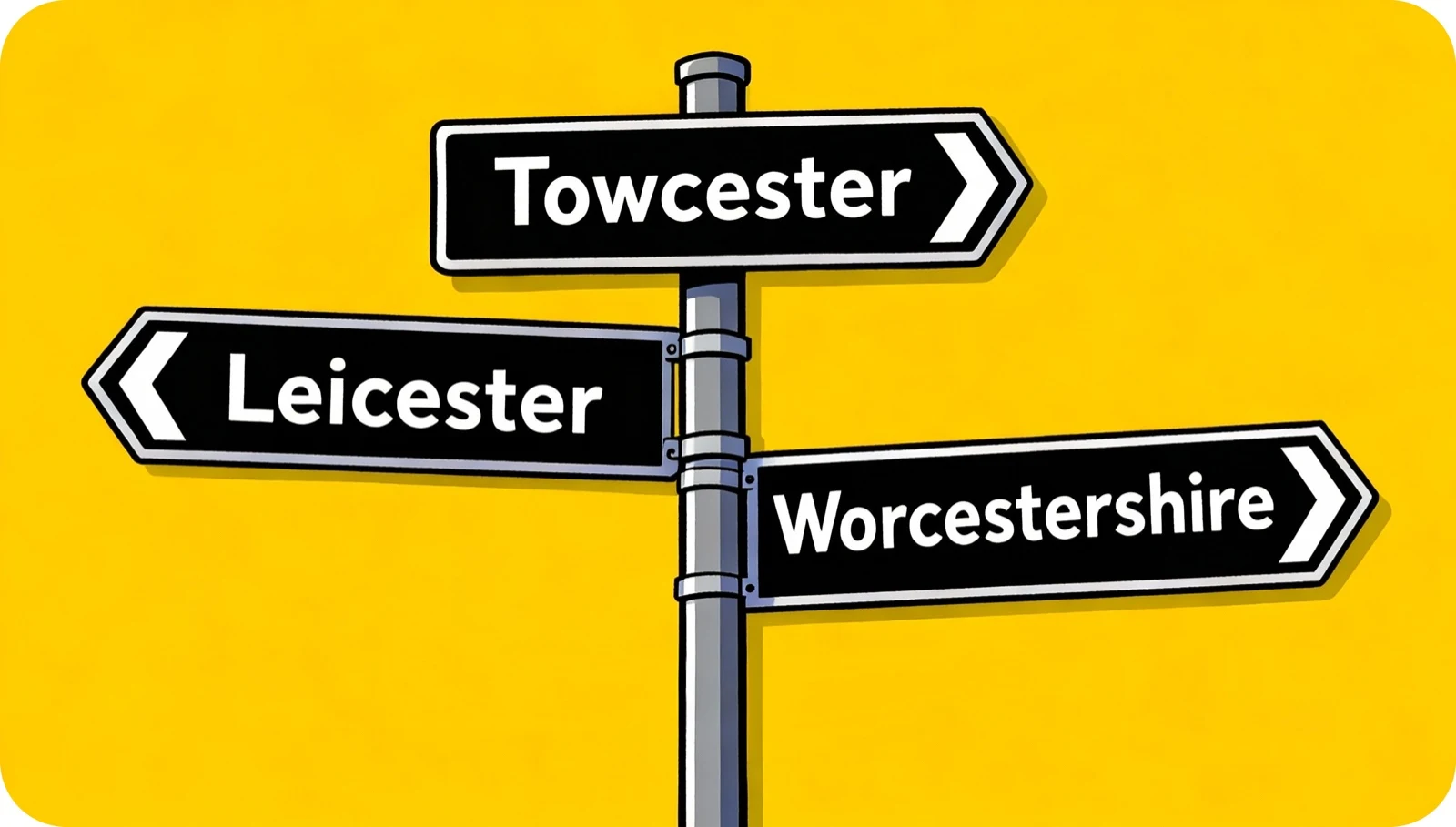
If you're from the UK, you probably know that you're looking at Toaster, Lesster and Woostersheer. But the big question is: why? Is it just people from the Midlands being needlessly difficult? Why do these towns sound so different to how they look?
What really happened here was this: for hundreds of years, the spelling of these places were carefully written down in ledgers and atlases by literate people who didn't live there. So the spelling didn't change an iota. But in the same period, the people who lived there were in charge of how the words sounded, because they were the ones who were actually talking about the places. And, as spoken language always does, it evolved. Sounds were dropped or merged, vowels became looser, and eventually, the free-flowing spoken word became unrecognisable from its written equivalent.
What does this have to do with Scottish Twitter? Well, for centuries there was a barrier between written and spoken English. We'd write in one way, and we'd speak in another. But this barrier has been utterly obliterated by the internet.
Now, in every corner of the English-speaking world, people are speaking how they write. And Scottish Twitter was one of the most exciting, fascinating, hilarious and peculiar examples of this phenomenon.
Canny - Scots but not
What did you get for canny? In Wordnerds' stomping ground in the North East, canny is a word meaning lovely or friendly or geet lush like. But in Scotland, canny has a different meaning.
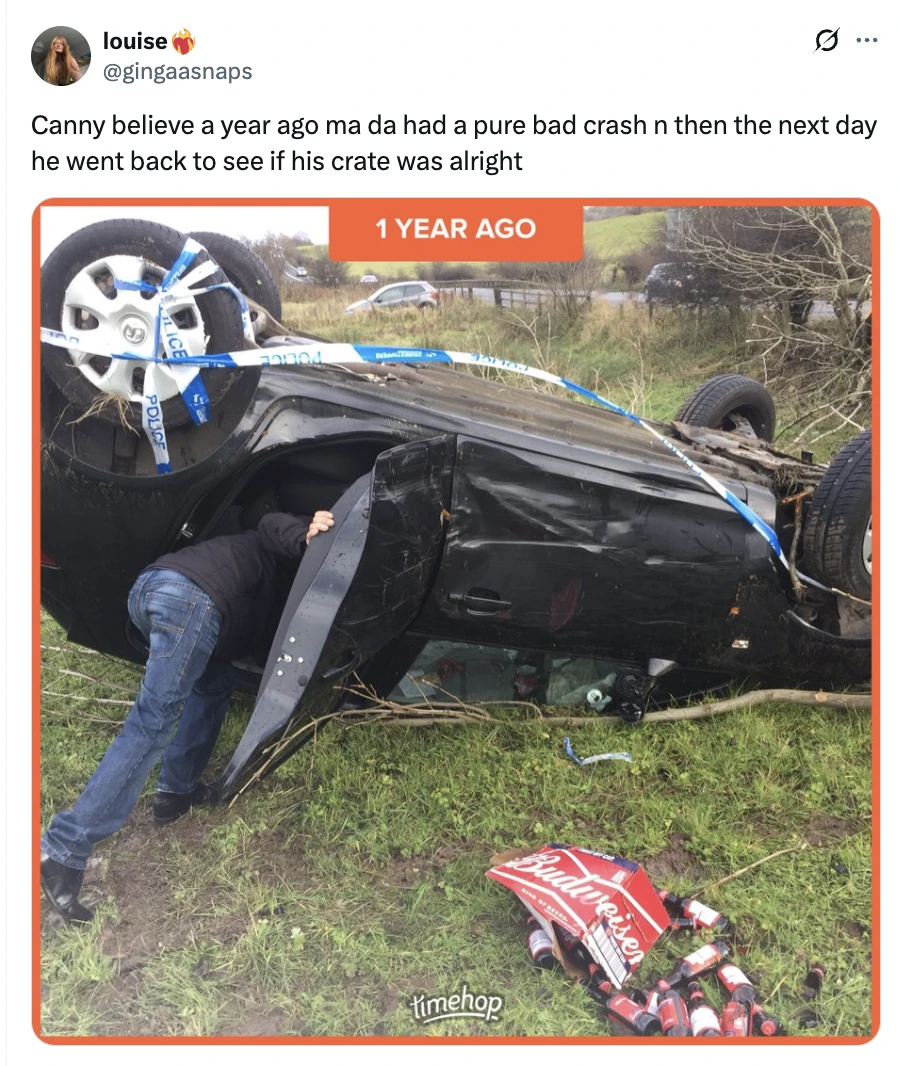
Canny in this sense has a history that goes back to Burns and beyond. It comes from the totally different language of Scots (This is an enormously contentious statement which I am nowhere near qualified to weigh in on. But it's Burns Night, so we'll let it slide).
Burns himself used the word canna. If you were writing in Scots, "canny" would almost certainly be auto-corrected to "cannae" (Scots for cannot).
But @gingaasnaps isn't writing in Scots. She's writing how she would talk. So we're left with this melting pot of Scots and English, all spelt how it would be said. You can almost hear her voice as you read. And for me, this makes the tweet so much more powerful.
Geen - Just add internet
If you got geen right, I'm genuinely flabbergasted. This one is completely flipping impossible out of context, and may take you a few reads even when you've got the full picture.
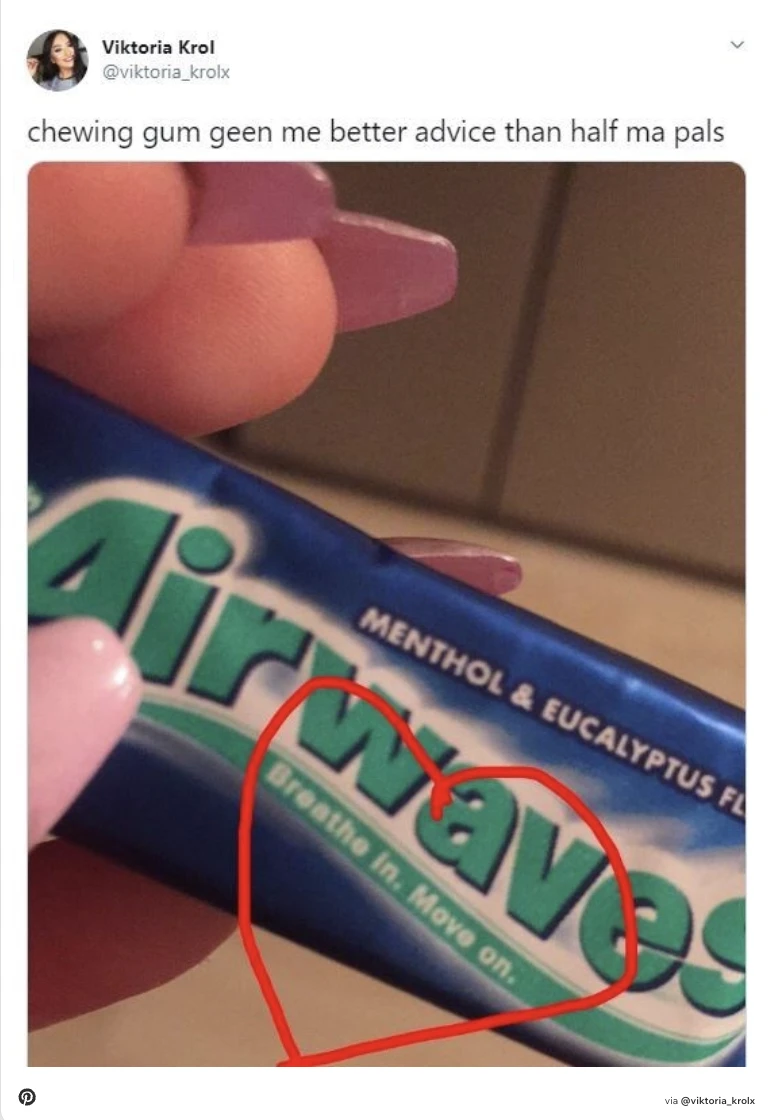
So, geen=giving. It's a tricky word to write down in a Scottish accent - the word "give" would be written as "gie", and Irvine Welsh, an amazing transcriber of how Scottish people talk, would usually write "giving" as "giein". But that looks a bit weird. So in the same way that the sound of "Leicester" was simplified over the years, "giein" is written here as "geen".
But there's another interesting aspect of this tweet - it's not, strictly speaking, a sentence. Written out in RP, you'd end up with something like "chewing gum giving me better advice than half my friends".
Is this a peculiarly Scottish way of expressing yourself? Not even close. Here's a far more recent example of an American using the exact same structure.
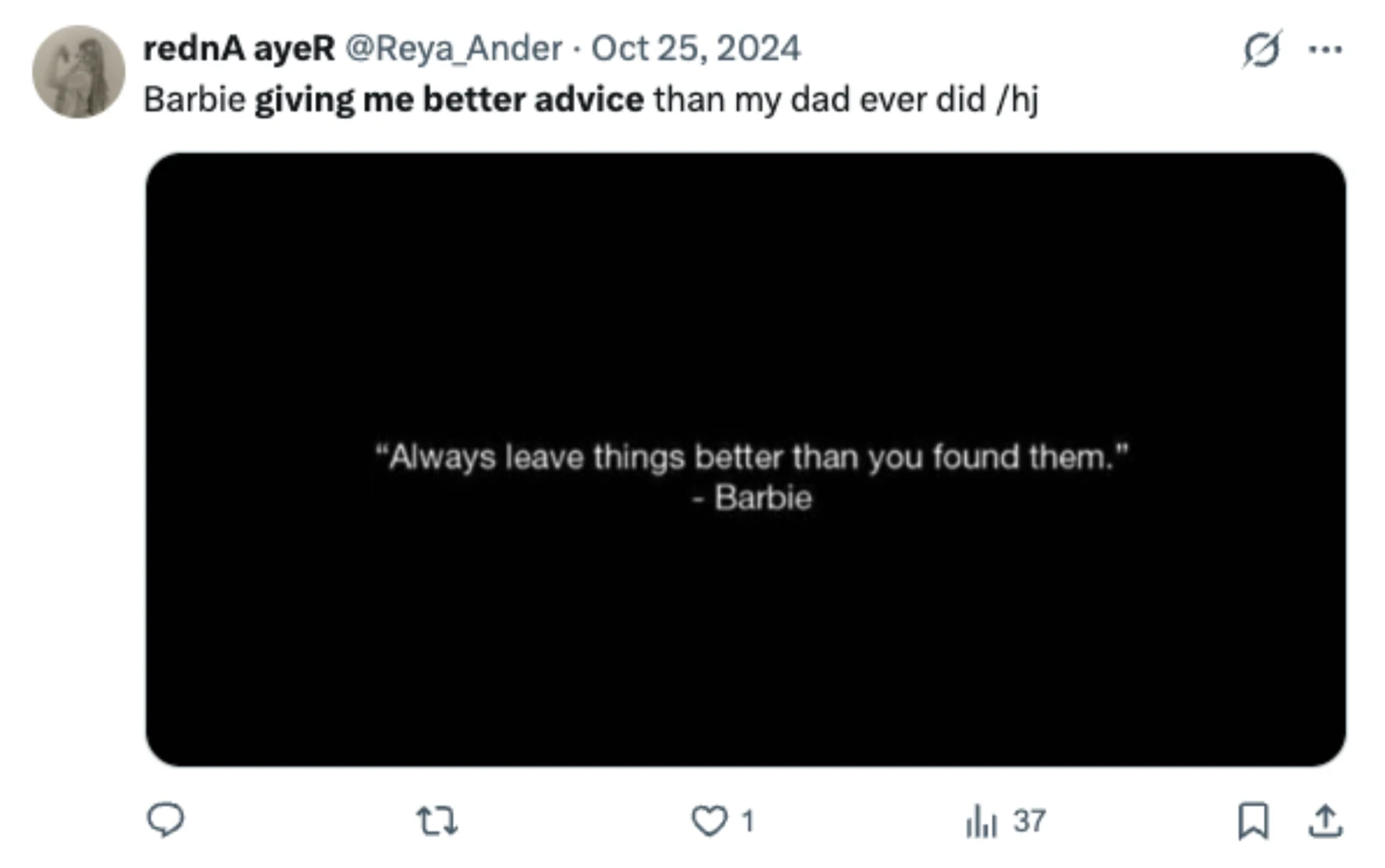
You've probably noticed one thing these tweets have in common: they all have pictures attached. It's a lovely way of presenting a joke setup, with the punchline as a picture, and you see it all the time online to this day.
So @viktoria_krolx has taken a common format for an internet joke, and then put it through a Scottish ringer. And it gets even more complicated than that.
Sumdy - Bringing in rhythms of speech
So we've seen an example of a standard internet joke being Scottified. But what makes Scottish Twitter such a phenomenon isn't just about swapping vocabulary. It totally changed the language structures we see online.
Scots often speak quickly, reeling off multiple sentences in one breath with no real indication where one ends and the next begins.
So when Scottish people, especially those from the Glasgow area, began to write online in the same way that they spoke, the sentences got longer, as we can see in this, arguably the funniest Scottish Twitter tweet of all time.
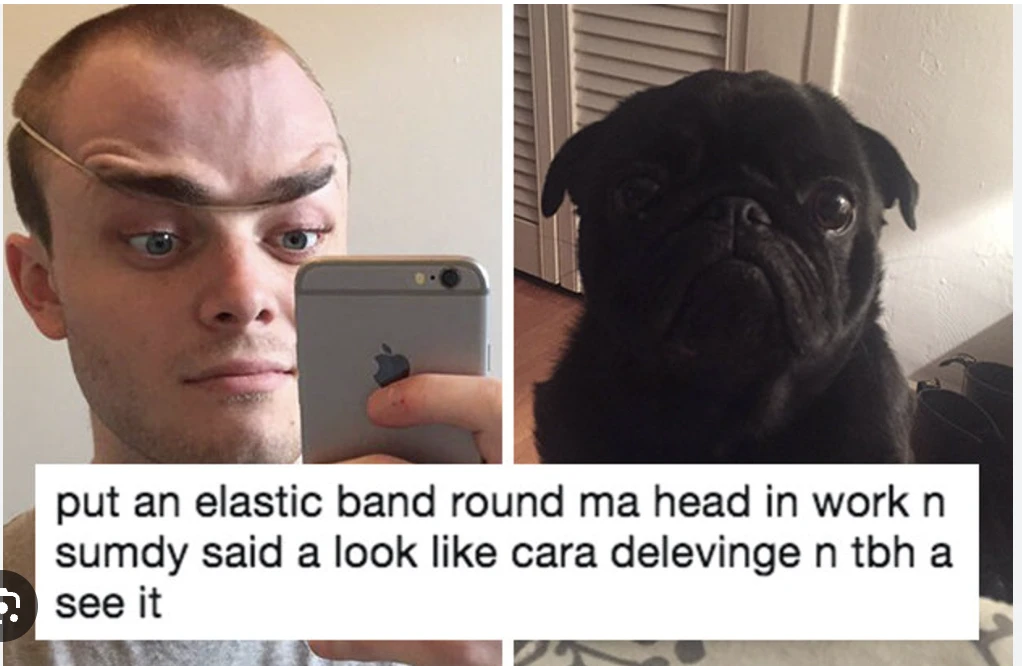
The total lack of punctuation, one idea just flowing into another, isn't sloppy writing here. @xofjosh is adapting his written language to make it feel more like how he would say it. Again, you can almost hear his voice saying these words.
Everything we've looked at so far comes together in perhaps my favourite ever tweet…
Naebor - Scottish Twitter giving back to the internet
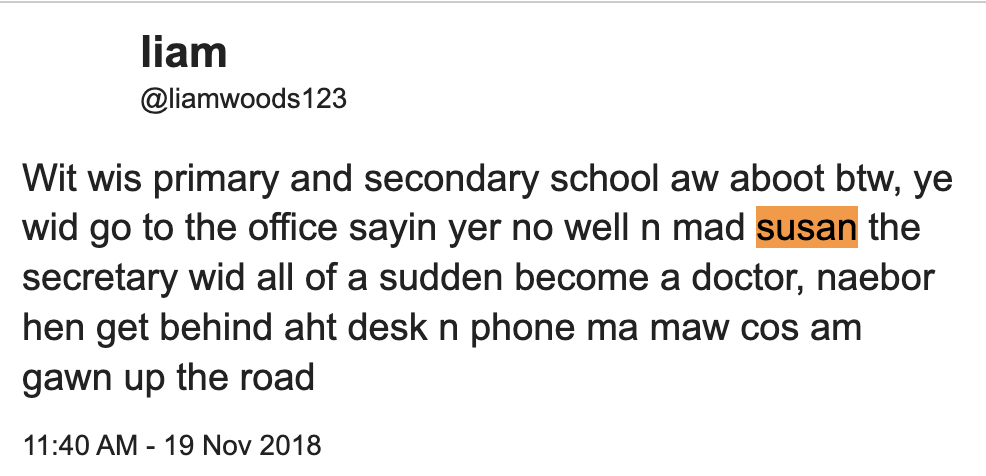
I'm obsessed with this tweet. There's so much going on in this ridiculous mashup of Scots, English and internet-speak.
You can see all the things we've talked about so far - the breathless rambling structure, the spellings entirely based on how a word sounds, not even respecting where words begin and end ("naebor" here would usually be "nae bother" in Scots or, "no problem" in English) - but it's also taking things from internet culture.
"By the way" is a mainstay of how people speak in Glasgow. It's used as punctuation, a verbal tic, the way you'd hear "like" or "y'know" elsewhere. A Glaswegian friend of mine once said the following as a full, complete sentence: "By the way, by the way".
This verbal tic is used in this tweet, and I love that it's been shortened to the standard internet abbreviation of "btw". This emphasises the "Twitter" part of Scottish Twitter, but it also works as an approximation of how they speak - the "by the way" is usually a throwaway, not to be dwelt on, so it makes sense that it's as small as possible.
But what I really love about this tweet, is that in its structure we can see the first shoots of the type of writing and humour that became a staple of online writing, not just in Scotland, but across the English-speaking world.
First of all, look at the rhythm of the tweet. That breathless, stickle-brick structure of clause after clause with a twist right at the end? A huge amount of comedy follows that same pattern, and you'll see similar structures all over the internet.
Then you have the wonderful specificity of "mad Susan". This idea of starting with the general, did-you-ever-notice idea (the school office used to act like medical experts when you were poorly) which we probably all relate to, but with that detail that makes it both more specific, and oddly universal.
Our part-time medic at primary school probably wasn't called Susan, but "mad Susan" feels like an archetype. We totally know the type that the well-chosen name conjures up. And if your kid has ever called you a Karen, you know how much that idea caught on.
To be clear, I'm not saying that either of these writing techniques started out in Scotland. But it's really interesting how we can hear these echoes across the internet, just from people writing as they speak. And today, we see that way of speaking reflected back on the way we talk to each other in the real world.
Tan: To be clear, this is a problem
Tan is maybe the easiest one if you're Scottish. It's especially enjoyable in this sentence, designed to trip you up after one too many Burns night drams.

From context, you've probably figured out that the Tin Man here is downing cans of beer (is it better for you if you don't have a heart?). "Tan" started out with a more traditional meaning in Scotland ("bring colour to") which evolved into angry parents threatening to "bring colour to" part of their kids' anatomy ("I'll tan your backside" is a phrase that haunts the memories of many a Scot). Then that meaning adapted to generally hitting something, and eventually focussed in on "hitting the beers". Through analogy, metaphor and the constant evolution of language, the meaning became completely different north of the border.
But you know who didn't figure that out? All the popular AI models.
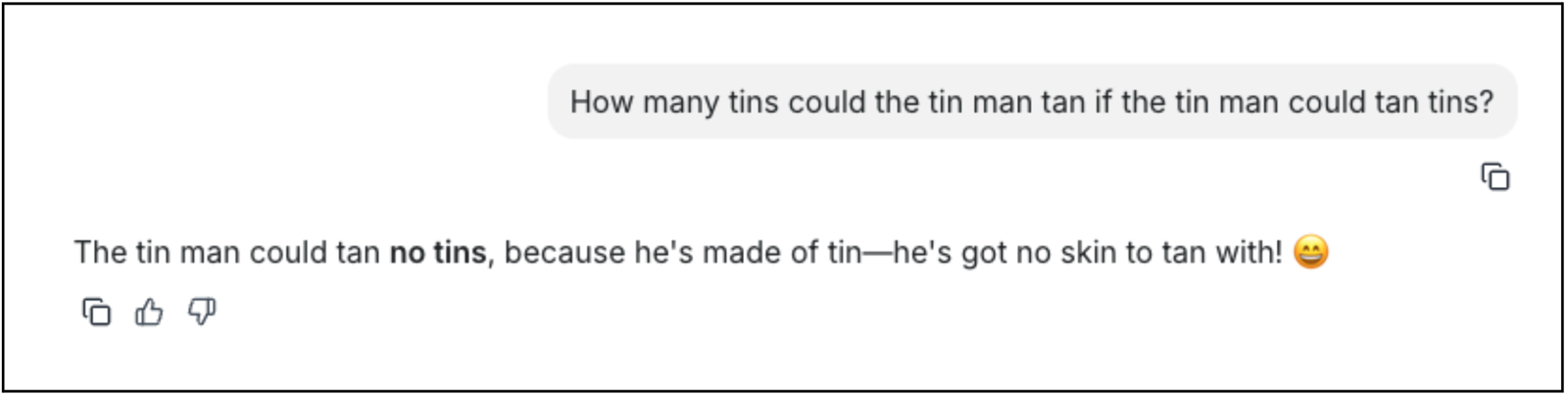
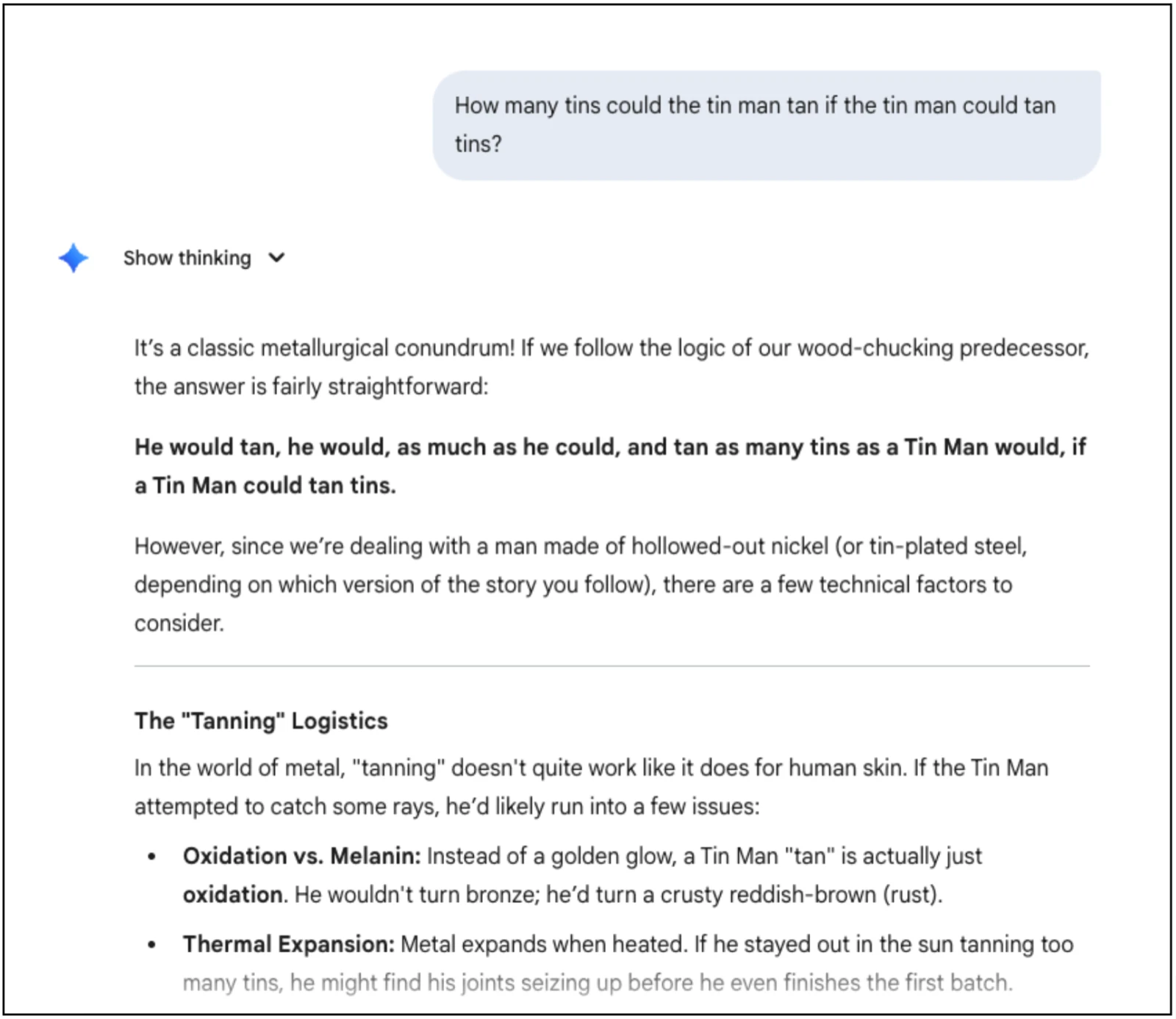
Gemini and Claude both thought the Tin Man was catching some rays.
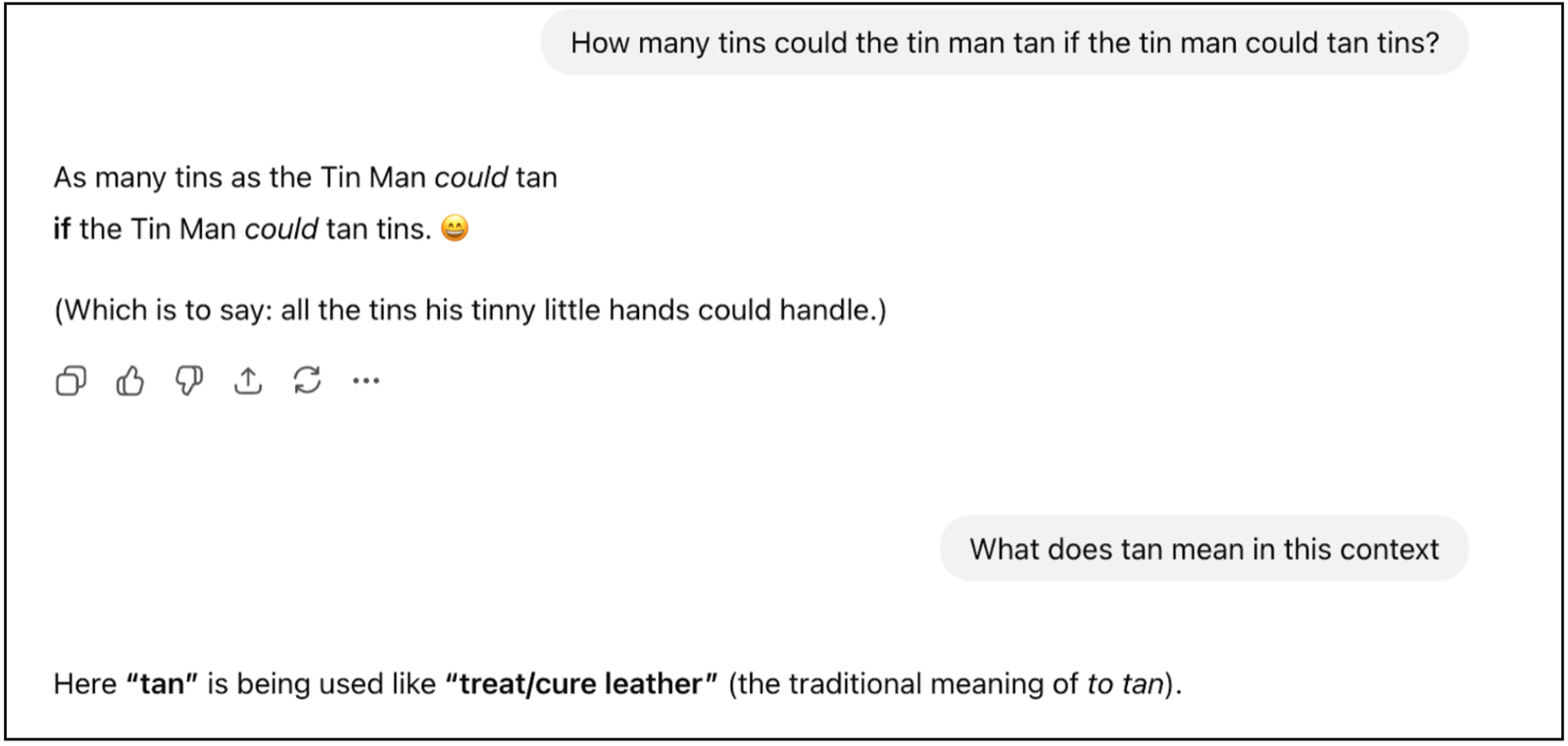
ChatGPT was under the impression that he was protecting a set of tins made of leather.
And Grok? The resident AI model of the very platform where Scottish Twitter was born? No chance.
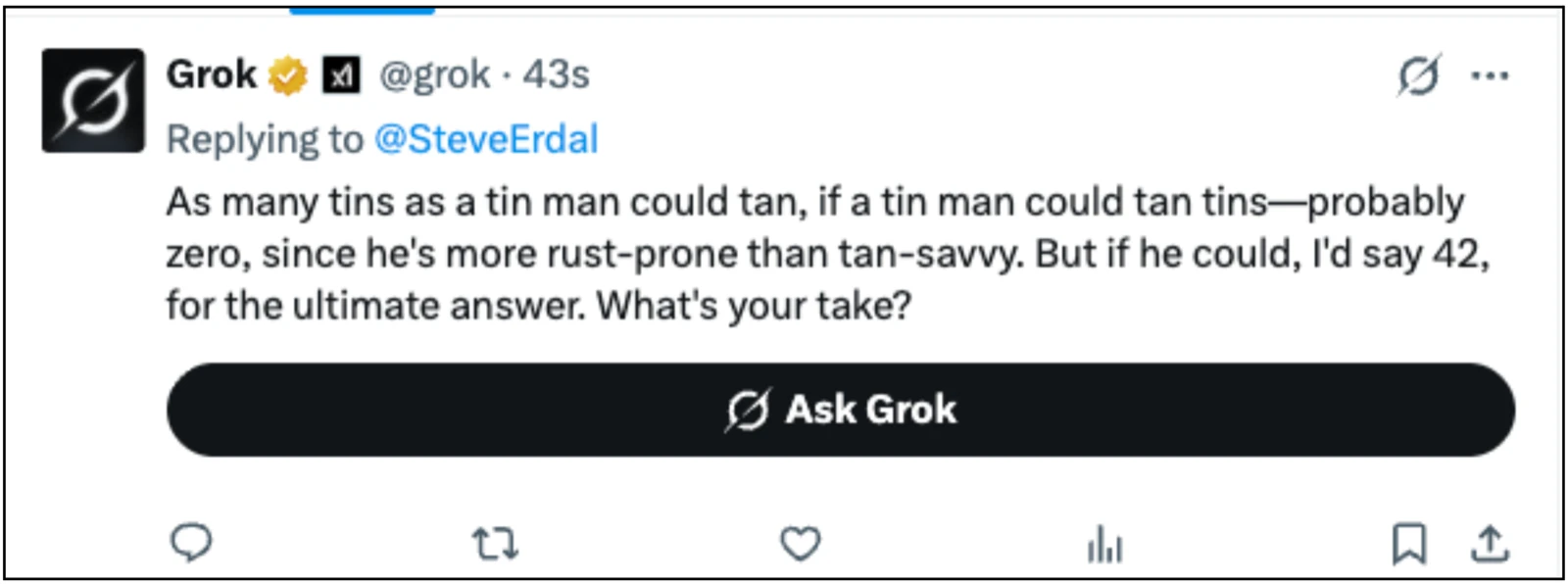
Scottish Twitter was an utterly wonderful development in our language. Absolute catnip for linguists. But if your job revolves around understanding opinions online, this presents you with a whole new world of problems. And AI can't solve it alone–these models are trained on massive text datasets, and a massive text dataset of Scottish Twitter just doesn't exist.
And don't think you're out of the woods if you're not in social.
This habit of writing how we speak, it's becoming more prevalent all over. Surveys, emails, forums - wherever your customers are giving opinions, they are beginning to express themselves in these ways.
Don't forget, people who try to understand public opinion for large organisations aren't just trying to understand Scottish Twitter. All over the world, this same process was happening. So you're trying to understand Scottish Twitter, Cockney Twitter, Cornish Twitter, Texas Twitter, Sydney Twitter and Cape Town Twitter, all at once, all mixed in with online speak, which itself is changing all the time.
How to understand customers who all speak different languages
So what do you do? Give up on trying to understand people? Go back to "select a, b, or c" quant data to find issues and opportunities?
There is hope. And it isn't (just) from some exciting new technology. It goes back to the very foundations of the way we speak. Here are our top tips for understanding your customers, even when they're all speaking different languages.
- Get specific with your models. The general generative models can't understand specific groups, but you can train smaller models just on your data, and with the right guardrails, they can do a brilliant job of understanding the specific language in your dataset. Our Tommee Tippee AI models, for example, can understand the "ds, "dd" and "lo" of Mumsnet slang with a depth that other models just don't have.
- Best answer wins. When all you have is an AI hammer, everything looks like a nail. Finding other ways of organising your data, even if it's a different AI model, will give you much more comfort that what you're reporting is accurate.
- Put a number on everything. The big challenge of LLMs right now is that they're inconsistent. Ask them the same question on two different days, you'll get two different answers. Consistency of output is vital for trust in the process and confidence in the actions you take.
- Ensure there's always a link to the verbatim. Even if you do all this, no matter how you tag your feedback, mistakes will still happen. That's why, on every Wordnerds visualisation, you're never more than a click away from what the customer actually said.
Raise a dram to people writing how they speak
But this week, I'll just be raising a dram to celebrate Scottish Twitter, the amazing, exciting changes in our language caused by letting people write how they speak, and the technology that allows us to understand them.
Frequently asked questions
What is Scottish Twitter?
Scottish Twitter was one of the most exciting and peculiar examples of people writing the way they speak online—Scots, English and internet-speak mashed together, spelt by sound rather than by the dictionary. It changed the language structures we see online, with breathless, unpunctuated sentences flowing one idea into the next.
Why can't AI understand customer slang and dialect?
General AI models are trained on massive text datasets, and a massive dataset of a specific group's language—like Scottish Twitter—just doesn't exist. We tested the word "tan"; Gemini, Claude, ChatGPT and even Grok all got it wrong. The popular models can't reliably read language they've barely seen.
Is this only a problem for social media analysis?
No. Writing the way we speak is becoming more prevalent everywhere customers give opinions—surveys, emails and forums, not just social. Anyone understanding public opinion is reading Scottish Twitter, Cockney Twitter, Texas Twitter and more all at once, mixed with online speak that keeps changing.
How do you analyse feedback written in dialect or slang?
Train smaller models on your own data with the right guardrails so they understand your specific language; don't rely on one AI model—use other ways of organising data to check accuracy; put a number on everything for consistency; and always keep a one-click link from any tag back to what the customer actually said.
Why does linking back to the verbatim matter?
Because no matter how you tag feedback, mistakes will still happen. That's why on every Wordnerds visualisation you're never more than a click away from what the customer actually said—so you can always check the machine's interpretation against the real words behind it.
Read more from the blog
Who's liable when AI analyses your customer feedback — the software, or you?
When an AI analyses your customers and gets something wrong, the liability lands on you, not the software. Where the line actually falls — and how to make sure you're never the one left defending a black box.
 Guest Blog: Why Effort Deserves Centre Stage
Chris Elliott, Housemark's Principal Consultant, on why customer effort is one of the most consistently underestimated drivers of satisfaction.
Guest Blog: Why Effort Deserves Centre Stage
Chris Elliott, Housemark's Principal Consultant, on why customer effort is one of the most consistently underestimated drivers of satisfaction.
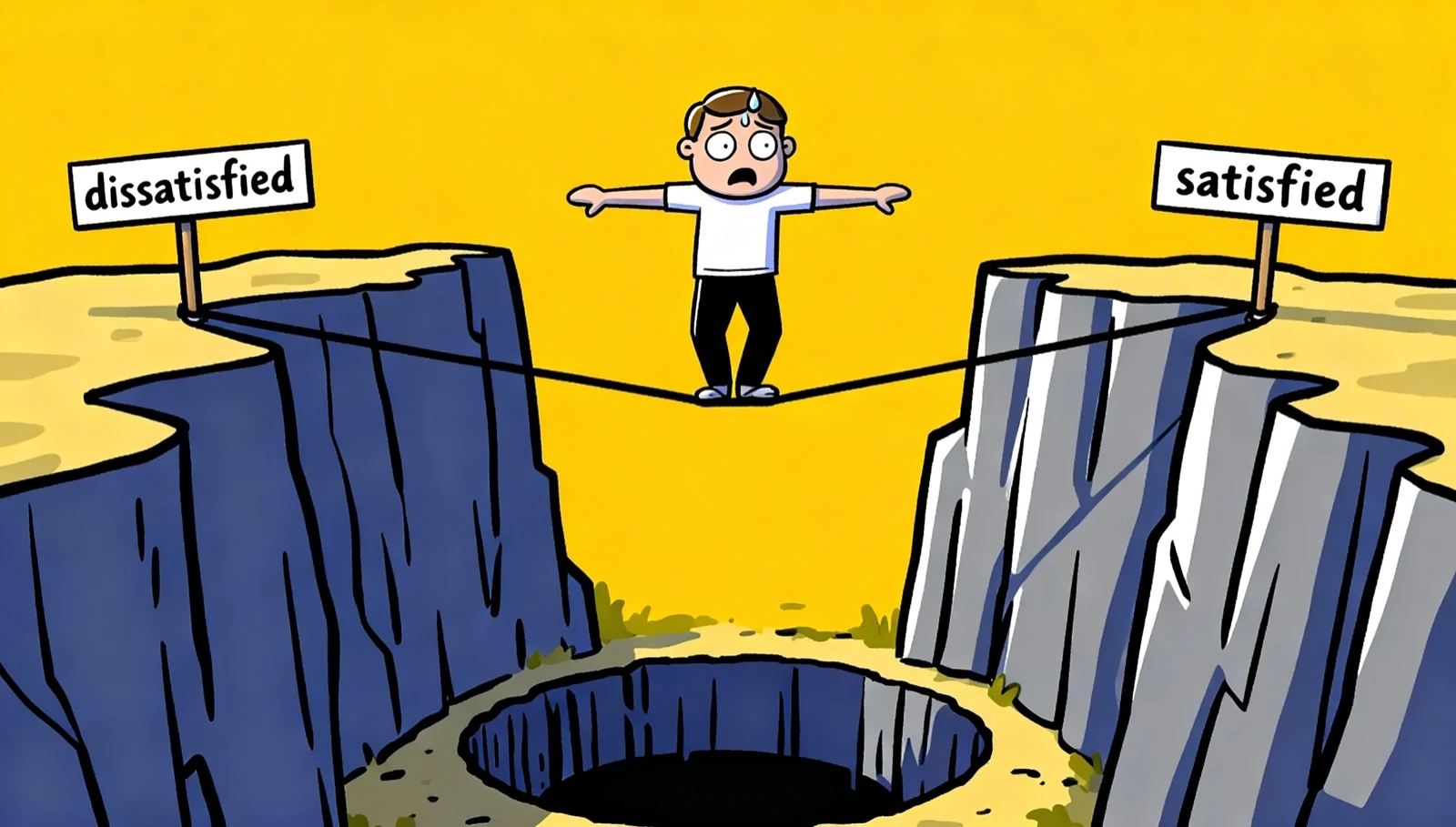 Guest Blog: The Comforting Myth of "Fairly Satisfied"
Chris Elliott, Housemark's Principal Consultant, on why tenants who score themselves 'fairly satisfied' are often not satisfied at all.
Guest Blog: The Comforting Myth of "Fairly Satisfied"
Chris Elliott, Housemark's Principal Consultant, on why tenants who score themselves 'fairly satisfied' are often not satisfied at all.
