 British Red Cross · Public Sector
From quotes in decks to patterns in supporters' own words
How the British Red Cross turned a few supporter quotes in decks into patterns every team can use.
← All customer stories
Greater Cambridge Partnership: what six months of manual coding missed
The Greater Cambridge Partnership's biggest consultation took six months and about £500,000 to analyse by hand. Dan Clarke tested Wordnerds against it, and the AI found what the manual coding had missed, in significantly less time and for significantly less money.
Last updated 12 November 2026
Watch the webinar
Watch Dan tell the story
Dan Clarke on The Insight Report, Episode 2, with the full transcript.
At a glance
- Greater Cambridge Partnership, local government
- Told by Dan Clarke, Head of Innovation and Technology
- AI tested against six months of manual coding
- Found two thirds of a topic the manual report missed
The challenge
Its biggest consultation took six months and £500,000 to analyse
Dan Clarke is Head of Innovation and Technology at the Greater Cambridge Partnership, the body that delivers the Greater Cambridge City Deal. He has worked with machine learning for about ten years, and knows a public body has to bring its members and the public along slowly.
In 2021 the partnership consulted on a sustainable transport zone, in effect a congestion charge for Cambridge, and one of the most controversial things it has ever proposed. It was the biggest consultation it had run, with just over 24,000 responses and about 145,000 written comments. A company coded them by hand. It did a really good job, but the analysis took about six months and cost about £500,000.
A long wait matters. It leaves room for false stories about why the results are taking so long, and people want to know how things are moving. So the partnership's then head of communications asked Dan whether AI could shorten the time and cut the cost.
The tender brought plenty of bids, but most were a black box
The open tender drew more bids than expected, and many simply offered to put the data into a large language model. A public body has to explain its decisions, so the partnership needed a process it could audit and check for bias.
-
Show how every result was reached
Wordnerds' tools let the team check each result against the responses behind it, and show people exactly where in the consultation every finding came from.
-
Prove itself on a past consultation
Wordnerds could analyse the 2021 consultation, already coded by hand, so the two could be compared with no decision riding on it. That mattered to members still bruised from the original.
-
Help bring members and officers along
Webinars with Wordnerds for board and assembly members, and for the officers who might use it, answered questions about ethics, GDPR and how residents would benefit.
Two thirds of the discussion about bus accessibility had been missed
Comparing the two analyses, Dan kept seeing results he knew instinctively but that the original report hadn't flagged. That was the light-bulb moment.
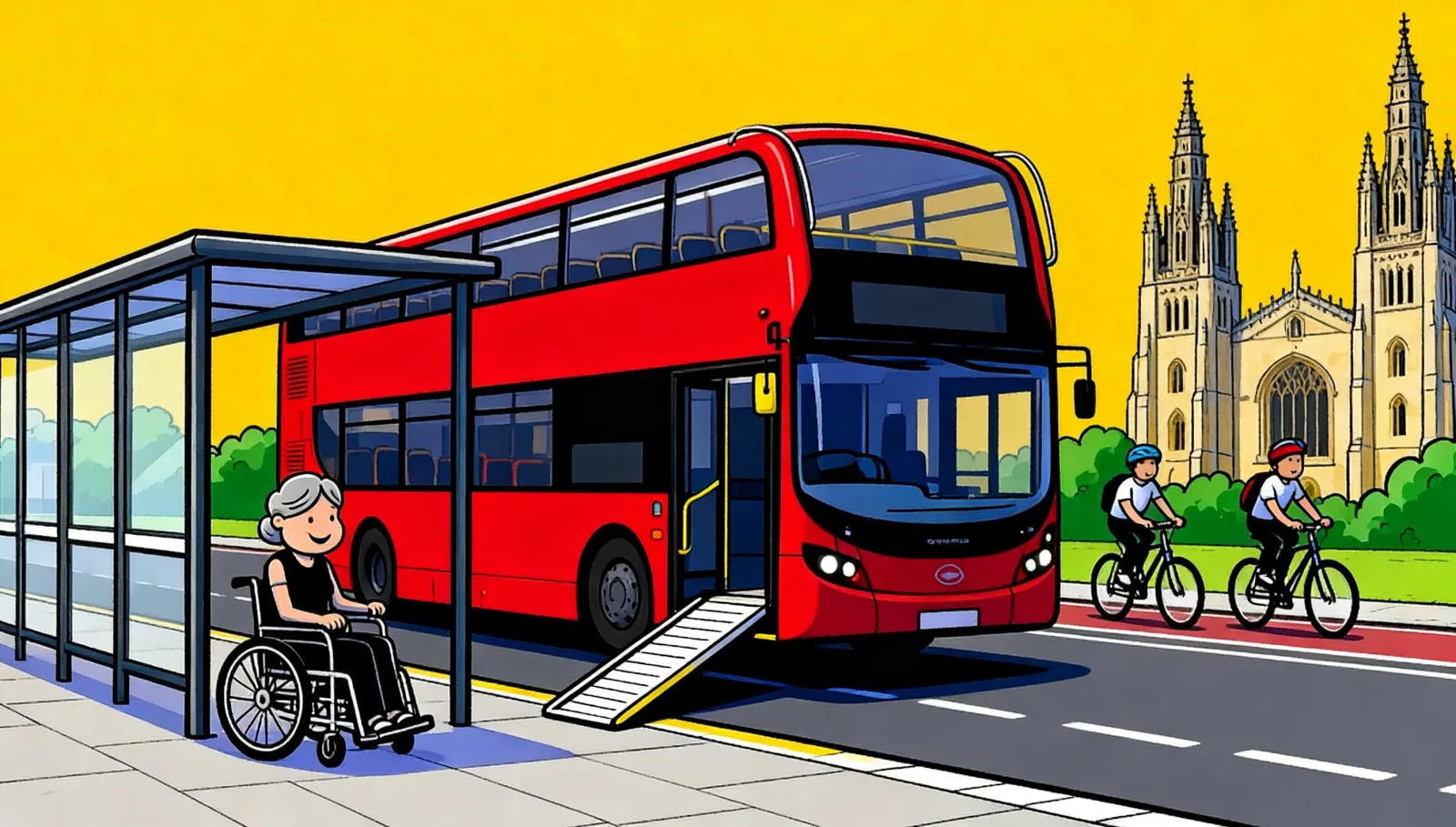
Wordnerds could look across the whole consultation in a way that's hard for someone coding comments one at a time. About two thirds of the discussion about bus accessibility had been missed in the original report, because it sat in comments about other subjects. Wordnerds linked accessibility to bus capacity and to the central bus station, connections the partnership hadn't made before, and equity on the transport network matters to it.
It found something in the demographics too. People aged 55 to 64 were the group most opposed to the zone, but their main concern wasn't personal. It was whether Cambridge's businesses would survive, and whether people could still get to the shops.
Faster, cheaper, and closer to what people actually said
Three things the test showed.
-
Results well within six months
Analysis that took six months by hand took significantly less time, which shortens the gap between closing a consultation and publishing the results.
-
Far less than the £500,000 it cost
The cost came down significantly against the £500,000 the manual coding cost, which matters for a public body looking for value from public money.
-
Insight the manual coding missed
Links across subjects, like bus accessibility and capacity, and the reasons behind each group's view, came through in a way the manual coding hadn't caught.
What changed
AI has a place in public consultation, as long as it's auditable
For the Greater Cambridge Partnership, the test showed that consultation analysis doesn't have to take months or cost six figures, as long as every result can be checked. The trust it built goes into the next step, with Wordnerds running alongside a live consultation, and only after that analysing one for real.
Because analysis no longer takes months, Dan sees room for a different kind of consultation, run more often and more iteratively.
Consultation results usually end up in a cupboard and are never used again. Analysed the same way each time, they can build into a body of evidence the partnership can reuse, so it can see how views change over time and join up what the city says about transport.
For Dan, the most important part of any consultation is the feedback loop. If people are asked for their views, they should be told how those views shaped the decision.
About the Greater Cambridge Partnership
The Greater Cambridge Partnership delivers the Greater Cambridge City Deal, one of the largest city deals in the UK. It brings together local councils and the University of Cambridge to invest in transport, housing and skills.
About Wordnerds
Wordnerds turns what customers say into what organisations do. We ingest feedback from surveys, complaints, reviews, calls and social; apply transparent, explainable AI to surface themes and drivers; and serve the insight two ways from one semantic model: full-detail Power BI for analysts, plain-language AI-chat answers for everyone else. Built for UK housing associations, transport operators and regulated sectors that need auditable evidence, not a black box.

Questions public sector leaders ask
Can AI analyse a public consultation as well as manual coding?
In the Greater Cambridge Partnership's test it did better. Wordnerds analysed a consultation of about 145,000 comments that had taken six months and about £500,000 to code by hand. It significantly cut the time and cost, and found about two thirds of the discussion on bus accessibility that the original report had missed.
How do you build trust in AI analysis at a public body?
Test it where nothing depends on it. The Greater Cambridge Partnership ran a consultation it had already coded by hand through Wordnerds and compared the two, with no decisions riding on the result. It brought members along through webinars, and plans a parallel run on a live consultation before using it for real.
What should a council look for in an AI analysis supplier?
An auditable process, not a black box. In its open tender, the Greater Cambridge Partnership turned away approaches that simply put data into a large language model and asked it questions. It wanted to see how every result was reached, check results against the original responses, and test for bias.
What happens to consultation results after the report is published?
Too often they're forgotten. Dan Clarke of the Greater Cambridge Partnership says consultation data usually ends up in a cupboard. Analysing every consultation the same way in Wordnerds lets the partnership build a body of evidence it can reuse and see how views on transport change over time.
More customer stories
British Red Cross · Public Sector
From quotes in decks to patterns in supporters' own words
How the British Red Cross turned a few supporter quotes in decks into patterns every team can use.
 DWP · Public Sector
Making a real difference to the lives of people, every day
How DWP Digital moved beyond costly manual research to understand the needs of 20 million users at scale — surfacing the stress that surveys had missed.
 A luxury hotel group · Travel & Hospitality
The survey said four out of five, and the comments said otherwise
How a luxury hotel group found what its four-out-of-five survey scores were hiding.
